In today’s fast-paced world, finding quick and convenient meal solutions is a constant quest. For many, the humble rice cooker has been a kitchen workhorse, expertly preparing fluffy grains with minimal fuss. But what if this versatile appliance could do more than just rice? Imagine ditching the large boiling pot, the constant stirring, and the messy draining. Yes, your trusty rice cooker can transform into a surprisingly effective pasta maker, offering a simpler, one-pot path to your favorite pasta dishes.
This guide will unveil the secrets to cooking pasta in a rice cooker, covering everything from selecting the best pasta shapes and mastering liquid ratios to a step-by-step cooking process and clever tips for perfecting your meal. Get ready to embrace a new, effortless way to enjoy pasta!
The Unexpected Convenience: Why Cook Pasta in a Rice Cooker?
Cooking pasta in a rice cooker offers a host of benefits that make it an attractive alternative to the traditional stovetop method. Foremost among these is unparalleled simplicity. There’s no need to wait for a large pot of water to boil, nor do you have to deal with the messy and sometimes hazardous task of draining hot water from cooked pasta. The rice cooker handles the cooking process with an absorbed-liquid method, much like how it prepares rice, meaning all the water is absorbed by the pasta.
This method significantly reduces cleanup, often leaving you with just one pot to wash. It also frees up valuable stovetop burners, making it ideal for small kitchens, dorm rooms, or when you’re preparing multiple dishes. Beyond basic pasta, the rice cooker truly shines when crafting one-pot meals. You can add sauces, vegetables, and pre-cooked proteins directly into the cooker, allowing all the flavors to meld beautifully without extra pots and pans.
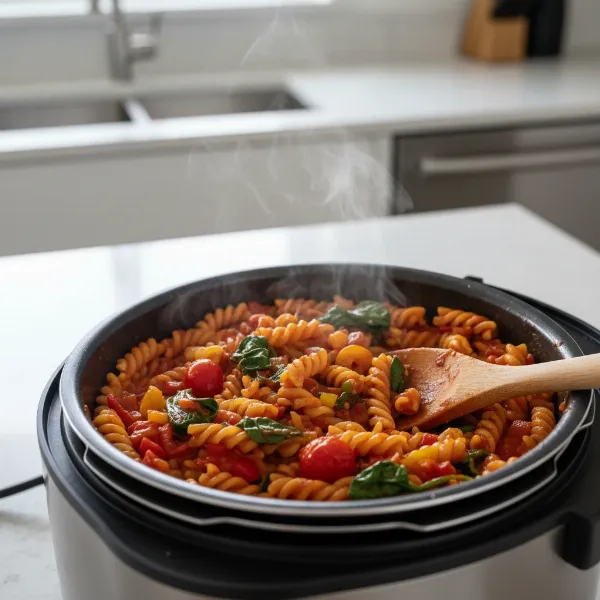 A rice cooker preparing a one-pot pasta meal with vegetables and sauce.
Choosing Your Pasta and Preparing for Success
While a rice cooker is remarkably versatile, selecting the right pasta and understanding basic ratios are key to achieving delightful results. Just like mastering the perfect rice, a little preparation goes a long way.
Best Pasta Shapes for Rice Cookers
|
Our Picks for the Best Rice Cooker in 2026
As an Amazon Associate I earn from qualifying purchases.
|
||
| Num | Product | Action |
|---|---|---|
| 1 | Zojirushi Micom 3-Cup Compact Size, Multiple Settings, Stainless Steel Made, Built-In Retractable Power Cord and Easy to Transport Rice Cooker and Warmer |

|
| 2 | AROMA® Select Stainless® Rice Cooker, 3-Cup (Uncooked) / 6-Cup (Cooked), Stainless Steel Inner Pot, Small Rice Cooker, Auto Keep Warm, 1.2 Qt, White, ARC-753SG |
|
| 3 | COSORI Rice Cooker 10 Cup, 24h Keep Warm, Non-stick Ceramic Inner Pot, 18 Functions Fuzzy Logic Rice Maker with Stainless Steel Steamer Basket, Sauté, Slow Cooker, Black |
|
| 4 | Instant Pot 4QT RIO Mini 7-in-1 Multi-Cooker, Pressure Cooker, Slow cook, Sauté, Steam, Rice Maker, Yogurt, & Warmer, Sea Salt, 4 Quarts |
|
| 5 | BLACK+DECKER Rice Cooker 6-Cup (Cooked) with Steaming Basket, Removable Non-Stick Bowl, White |
|
| 6 | COMFEE' Compact Rice Cooker, 6-in-1 Stainless Steel Multi Cooker, Slow Cooker, Steamer, Saute, and Warmer, 2 QT, 8 Cups Cooked(4 Cups Uncooked), Brown Rice, Quinoa and Oatmeal, 6 One-Touch Programs |
|
| 7 | AROMA® Mini Rice Cooker, 2-Cup (Uncooked) / 4-Cup (Cooked), Grain Cooker, Soup Maker, Oatmeal Cooker, Auto Keep Warm, 1 Qt, Light Green |
|
| 8 | AROMA® Mini Rice Cooker, 2-Cup (Uncooked) / 4-Cup (Cooked), Grain Cooker, Soup Maker, Oatmeal Cooker, Auto Keep Warm, 1 Qt, Milk Tea color |
|
| 9 | AROMA Digital Rice Cooker, 4-Cup (Uncooked) / 8-Cup (Cooked), Steamer, Grain Cooker, Multicooker, 2 Qt, Stainless Steel Exterior, ARC-914SBD |
|
| 10 | Aroma Housewares 4-Cups (Cooked) / 1Qt. Rice & Grain Cooker (ARC-302NGBL), Blue |
|
When it comes to cooking pasta in a rice cooker, certain shapes perform better than others. Short and medium pasta shapes are your best friends here. Think penne, fusilli, macaroni, orzo, and small shells. These shapes cook more evenly and fit comfortably within the rice cooker’s pot, ensuring consistent results.
Longer pasta types like spaghetti or linguine can also be cooked, but they require a small modification: breaking them in half so they fit neatly inside the cooker. Attempting to force long strands into the pot without breaking them can lead to uneven cooking or damage to your appliance. Keep in mind that pasta significantly doubles in volume once cooked, so always factor this into your portion sizes to avoid overfilling the cooker.
Essential Ingredients and Ratios
Beyond the pasta itself, a few key ingredients and precise liquid ratios are crucial for success. You’ll need your chosen pasta, of course, along with water or broth for cooking. Using broth instead of plain water can impart an extra layer of flavor to your pasta without much added effort. A pinch of salt is also recommended to season the pasta, but be mindful, especially if you’re using salted broth.
Perhaps the most critical addition is a small amount of vegetable or olive oil. About a teaspoon is usually sufficient. This oil plays a dual role: it helps prevent the pasta from sticking together, and it significantly reduces the likelihood of the starchy water foaming up and overflowing during the cooking cycle. As for the liquid-to-pasta ratio, a good starting point is approximately 1.5 to 2 cups of liquid for every 1 cup of dry pasta. This ratio can be slightly adjusted based on your desired pasta texture; less liquid for a firmer, more al dente result, and a bit more for softer pasta.
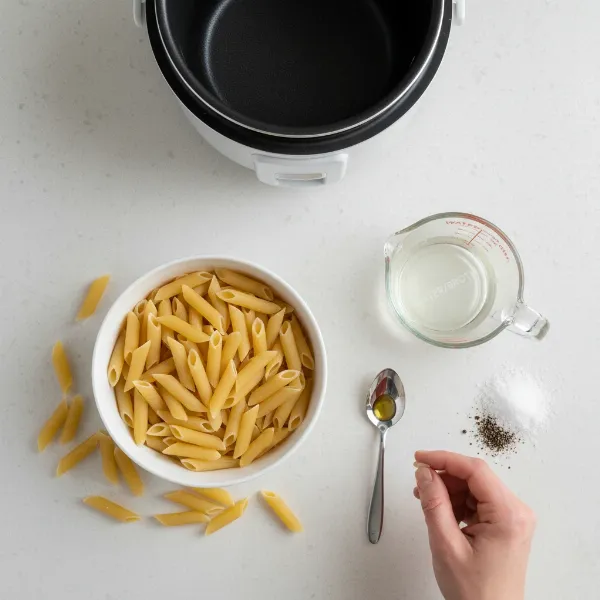 Essential ingredients for rice cooker pasta, including dry pasta, liquid, oil, and salt.
Step-by-Step Guide to Perfect Rice Cooker Pasta
Cooking pasta in a rice cooker is a straightforward process, but it deviates slightly from cooking rice. By following these steps, you’ll be on your way to a delicious, no-fuss pasta meal.
Preparation
Begin by accurately measuring your dry pasta and the corresponding liquid (water or broth) according to the ratio discussed earlier. Remember that pasta will expand considerably, so don’t overcrowd your rice cooker. If you’re using long pasta varieties like spaghetti, break them in half to ensure they fit well within the cooker’s pot and cook evenly. Add a teaspoon of vegetable or olive oil to the liquid, which is crucial for preventing sticking and reducing foam. Lastly, add a pinch of salt to the liquid for seasoning, being careful not to overdo it if you’re using a flavorful broth.
Cooking Process
Once your ingredients are prepped, add the dry pasta, liquid, oil, and salt (and any other desired seasonings) directly into your rice cooker pot. Give everything a gentle stir to ensure the pasta is submerged and coated. Close the rice cooker lid securely and select the “Cook” setting, or if your rice cooker has specific settings, the “White Rice” or “Quick Cook” mode is generally suitable. During the cooking cycle, it’s beneficial to open the lid and stir the pasta two to three times. This periodic stirring prevents the pasta from clumping together and sticking to the bottom of the pot, promoting more even cooking.
Checking for Doneness and Adjusting
Pasta cooking times in a rice cooker can vary, typically ranging from 10 to 25 minutes, depending on the pasta shape and your specific appliance. Start checking for doneness around the 15-20 minute mark. Your rice cooker will likely switch to its “Keep Warm” setting once it detects the liquid has been absorbed. At this point, open the lid and taste a strand of pasta. If it’s not quite cooked through or you prefer a softer texture, simply add a splash more water or broth (a quarter to half a cup should suffice), stir, and restart the “Cook” cycle. Continue checking every few minutes until your pasta reaches the perfect al dente or desired tenderness. Be cautious not to overcook, as pasta can quickly turn mushy.
Elevating Your Rice Cooker Pasta: Tips and Tricks
Mastering the basics is just the beginning. With a few additional tips, you can consistently achieve excellent results and even transform your rice cooker into a one-pot meal powerhouse.
One common challenge is preventing excessive foam and pasta from sticking. As mentioned, adding a teaspoon of vegetable or olive oil at the start is your primary defense against foaming over. Regular stirring (2-3 times) during the cooking cycle is also critical to keep the pasta from clumping or adhering to the bottom of the pot.
Achieving your desired al dente texture requires a keen eye and willingness to experiment. Start with the recommended liquid-to-pasta ratio and begin checking the pasta a few minutes before the expected cook time. If it’s still too firm, add a small amount of extra liquid and restart the cook cycle briefly. Conversely, if you prefer softer pasta, a little more liquid from the outset will help.
To enhance flavor, consider replacing plain water with chicken or vegetable broth. You can also add herbs, spices, or a dash of garlic powder along with the initial ingredients. For a complete and satisfying meal, rice cookers excel at one-pot meal ideas. Incorporate pre-cooked proteins like shredded chicken, sausage, or shrimp. Quick-cooking vegetables such as spinach, peas, diced bell peppers, or cherry tomatoes can also be added during the last 5-10 minutes of cooking. Adding your favorite pasta sauce along with the liquid can create a truly integrated dish.
Finally, always be mindful of safety. When opening the rice cooker lid, especially during or immediately after cooking, beware of hot steam. It can be very intense, so open it carefully, directing the steam away from your face and hands.
Rice Cooker Pasta vs. Stovetop: A Quick Comparison
While both methods yield cooked pasta, they offer distinct experiences. Understanding their differences can help you choose the best approach for your culinary needs.
| Criteria | Rice Cooker Pasta | Stovetop Pasta |
|---|---|---|
| Ease of Use | Very easy, minimal supervision, no draining. | Moderate, requires monitoring boiling water, draining. |
| Cleanup | Minimal, often just one pot. | More cleanup, usually a large pot and a colander. |
| Time (Active) | Less active time, but overall cooking time can be similar or slightly longer. | Faster active cook time (boiling water, quick cook). |
| Texture Control | Can be tricky to achieve perfect al dente, may lean softer. | Easier to achieve precise al dente. |
| Versatility | Excellent for one-pot meals (pasta + sauce + ingredients). | Primarily for cooking plain pasta to be sauced separately. |
| Space Needed | Ideal for small kitchens, dorms, or when stovetop is busy. | Requires dedicated stovetop burner and counter space for pot. |
Troubleshooting Common Rice Cooker Pasta Issues
Even with the best intentions, you might encounter a few hiccups when venturing into rice cooker pasta. Here are some common problems and their solutions:
- Pasta is too sticky or mushy: This usually indicates too much liquid or overcooking. Next time, reduce the liquid slightly or start checking for doneness a few minutes earlier. Ensure you add oil and stir periodically.
- Pasta is not cooked through (hard in the middle): The pasta didn’t absorb enough liquid or wasn’t cooked long enough. Add a small amount of extra water or broth and restart the cook cycle for another 5-10 minutes, checking frequently. Ensure the pasta is fully submerged initially.
- Foaming over: This is a common issue with starchy pasta. Ensure you’ve added a teaspoon of oil to the cooking liquid. If it starts to foam, you can briefly lift the lid to let some steam escape, or add another tiny splash of oil.
- Rice cooker switches to “warm” too early: Rice cookers are designed to switch modes when all liquid is absorbed, which might happen before pasta is fully cooked. Simply add a small amount of liquid and manually restart the “Cook” cycle until the pasta reaches your desired tenderness.
Conclusion
The rice cooker, often relegated to a single function, proves its incredible adaptability by offering a practical and convenient method for cooking pasta. From simple weeknight dinners to creative one-pot culinary experiments, it eliminates the need for large boiling pots and messy draining, streamlining your kitchen routine. By understanding the right pasta types, mastering liquid ratios, and employing a few simple techniques like adding oil and periodic stirring, you can consistently achieve delicious pasta with minimal effort.
So, next time you’re craving pasta but dread the traditional cleanup, remember the humble rice cooker. It’s a game-changer for quick, effortless meals that don’t compromise on flavor. Why not give it a try tonight and discover the ease for yourself? What creative one-pot pasta creation will you try first in your rice cooker?
Frequently Asked Questions
Can I cook any type of pasta in a rice cooker?
Smaller to medium-sized pasta shapes like penne, fusilli, macaroni, and orzo work best. Long pasta such as spaghetti can be cooked, but it’s advisable to break it in half to fit and ensure even cooking.
What’s the best water-to-pasta ratio for a rice cooker?
A good general guideline is 1.5 to 2 cups of liquid (water or broth) for every 1 cup of dry pasta. Adjust slightly based on your desired texture; less for al dente, more for softer pasta.
How do I prevent pasta from sticking in the rice cooker?
Adding a teaspoon of vegetable or olive oil to the cooking liquid is crucial. Additionally, stir the pasta two to three times during the cooking cycle to prevent clumping and sticking to the pot.
Can I add sauce directly to the rice cooker with the pasta?
Yes, absolutely! For a one-pot meal, you can add your preferred pasta sauce, along with pre-cooked proteins and quick-cooking vegetables, directly to the rice cooker with the dry pasta and liquid.
How long does it take to cook pasta in a rice cooker?
Cooking times vary depending on the pasta type and your specific rice cooker, but generally, it takes between 10 to 25 minutes. It’s best to start checking for doneness around the 15-minute mark and continue until the pasta reaches your desired texture.