There are few things more frustrating in the kitchen than planning a delicious meal, only to have your trusty rice cooker display an enigmatic error code. When your rice cooker flashes “E01” or “E02,” it signals an internal issue preventing it from operating correctly. Understanding what these common error codes signify and how to address them can save you time, money, and the disappointment of uncooked rice. This comprehensive guide will walk you through diagnosing and resolving “E01” and “E02” errors, helping you get back to perfectly cooked grains in no time.
Understanding Rice Cooker Error Codes
Modern rice cookers, especially advanced models, are equipped with intricate sensors and electronic systems designed to ensure safe and efficient operation. When these systems detect a deviation from normal parameters—such as an improperly closed lid, an overheating component, or a sensor malfunction—they display an error code to alert the user. These codes act as digital distress signals, pointing towards the specific area of concern within the appliance. While user manuals often list these codes, a general understanding of their common meanings can empower you to perform initial troubleshooting.
Decoding the “E01” Error Code
The “E01” error code in rice cookers is typically associated with issues related to temperature sensors or the lid locking mechanism. This error suggests the cooker is either unable to accurately measure temperature or detect that its lid is securely closed, both critical conditions for safe and effective cooking.
What “E01” Typically Means
The “E01” error can arise from several factors, often revolving around the cooker’s ability to sense its internal state.
- Temperature Sensor Malfunction: The rice cooker relies on a temperature sensor, usually located at the bottom of the cooking pot, to regulate heating. If this sensor is faulty, disconnected, or obscured by debris, it cannot provide accurate readings, leading to an “E01” error. Without precise temperature data, the cooker cannot initiate or maintain the cooking cycle safely.
- Lid Lock/Sensor Issues: Many advanced rice cookers feature a lid lock mechanism and an associated sensor to ensure the lid is properly sealed under pressure or simply for operational safety. If the lid is not correctly aligned, fully closed, or if the lid sensor’s wiring is damaged, the cooker may display “E01,” indicating it perceives an open circuit or an unsafe lid position. Brands like Cuckoo often link this code to a broken lid lock sensor cable, a common wear-and-tear issue.
- Open Circuit in Bottom Sensor: In some models, particularly those with a sensor at the bottom, an “E01” code might specifically point to an open circuit, meaning the electrical path to the sensor is interrupted. This could be due to loose connections, cut wires, or a damaged printed circuit board (PCB).
|
Our Picks for the Best Rice Cooker in 2026
As an Amazon Associate I earn from qualifying purchases.
|
||
| Num | Product | Action |
|---|---|---|
| 1 | COSORI Rice Cooker 10 Cup, 24h Keep Warm, Non-stick Ceramic Inner Pot, 18 Functions Fuzzy Logic Rice Maker with Stainless Steel Steamer Basket, Sauté, Slow Cooker, Black |

|
| 2 | AROMA Digital Rice Cooker, 4-Cup (Uncooked) / 8-Cup (Cooked), Steamer, Grain Cooker, Multicooker, 2 Qt, Stainless Steel Exterior, ARC-914SBD |
|
| 3 | AROMA® Mini Rice Cooker, 2-Cup (Uncooked) / 4-Cup (Cooked), Grain Cooker, Soup Maker, Oatmeal Cooker, Auto Keep Warm, 1 Qt, Milk Tea color |
|
| 4 | Aroma Housewares 4-Cups (Cooked) / 1Qt. Rice & Grain Cooker (ARC-302NGBL), Blue |
|
| 5 | BLACK+DECKER Rice Cooker 6-Cup (Cooked) with Steaming Basket, Removable Non-Stick Bowl, White |
|
| 6 | Instant Pot 4QT RIO Mini 7-in-1 Multi-Cooker, Pressure Cooker, Slow cook, Sauté, Steam, Rice Maker, Yogurt, & Warmer, Sea Salt, 4 Quarts |
|
| 7 | AROMA® Mini Rice Cooker, 2-Cup (Uncooked) / 4-Cup (Cooked), Grain Cooker, Soup Maker, Oatmeal Cooker, Auto Keep Warm, 1 Qt, Light Green |
|
| 8 | AROMA® Select Stainless® Rice Cooker, 3-Cup (Uncooked) / 6-Cup (Cooked), Stainless Steel Inner Pot, Small Rice Cooker, Auto Keep Warm, 1.2 Qt, White, ARC-753SG |
|
| 9 | Zojirushi Micom 3-Cup Compact Size, Multiple Settings, Stainless Steel Made, Built-In Retractable Power Cord and Easy to Transport Rice Cooker and Warmer |
|
| 10 | COMFEE' Compact Rice Cooker, 6-in-1 Stainless Steel Multi Cooker, Slow Cooker, Steamer, Saute, and Warmer, 2 QT, 8 Cups Cooked(4 Cups Uncooked), Brown Rice, Quinoa and Oatmeal, 6 One-Touch Programs |
|
Step-by-Step Troubleshooting for “E01”
Before attempting any complex repairs, try these simple troubleshooting steps:
- Power Cycle and Cool Down: The first and simplest step is to unplug your rice cooker from the power outlet, wait for at least 10-15 minutes to allow internal components to reset and cool completely, then plug it back in. Sometimes, a temporary glitch or minor overheating can trigger the error, and a power cycle can resolve it.
- Check Lid Alignment and Sealing: Ensure the lid is perfectly aligned and fully closed. For models with a twist-lock or secure latch, make sure it’s engaged properly. Inspect the lid and its sealing gasket for any signs of damage or trapped food particles that might prevent a complete seal. A misaligned lid is a common culprit.
- Inspect and Clean Sensors: Gently inspect the visible temperature sensor at the bottom center of the heating plate (where the inner pot sits) and any lid sensors. Ensure they are clean and free from rice grains, spills, or other debris. Use a soft, damp cloth to wipe them clean, being careful not to scratch or damage them.
- Examine Wiring (with Caution): If your lid lock has visible wiring (often around the hinge in Cuckoo models), visually inspect it for breaks or fraying. This step should be approached with extreme caution, and only if you are comfortable with minor appliance inspection and have unplugged the unit. For significant internal wiring issues, professional help is recommended.
When to Seek Professional Help for “E01”
If basic troubleshooting steps do not resolve the “E01” error, especially if you suspect internal wiring damage, a faulty PCB, or a broken sensor that requires replacement, it’s time to contact the manufacturer’s customer support or an authorized service technician. Attempting complex internal repairs without proper expertise can further damage the appliance or pose safety risks.
Decoding the “E02” Error Code
The “E02” error code often signals issues related to the inner cooking pot’s placement, debris on the heating element, or a problem with the heating element itself. This error suggests the rice cooker cannot properly detect the presence of the inner pot or effectively heat its contents.
What “E02” Typically Means
An “E02” error usually indicates a problem directly impacting the cooking process’s heat delivery or pot detection.
- Inner Pot Seating Issues: The most frequent cause of an “E02” error is that the inner pot is not correctly placed inside the cooker. If it’s misaligned, tilted, or not making full contact with the heating plate at the bottom, the cooker’s sensors cannot detect it properly, or heat transfer will be inefficient.
- Debris Under the Inner Pot: Even a few grains of rice, water droplets, or other small food particles lodged between the inner pot and the heating element can interfere with the sensor readings or heat distribution, leading to an “E02” error. In some extreme cases, burning debris can cause a foul smell and trip internal fuses.
- Heating Element Problems: In some rice cooker brands (like Black & Decker or Toshiba), “E02” specifically points to a malfunction with the heating element. If the heating element is not generating heat as expected, or if it’s overheating due to an internal fault, this code may appear.
- Temperature Sensor Error: While “E01” is more commonly linked to temperature sensors, “E02” can also indicate a temperature sensor error, particularly in certain models or induction cooktops where the sensor beneath the pot is crucial for heat management.
Step-by-Step Troubleshooting for “E02”
Follow these steps to address an “E02” error:
-
Power Cycle and Cool Down: As with “E01,” unplug the rice cooker and let it cool down completely for at least 10-15 minutes before plugging it back in.
-
Verify Inner Pot Placement: Remove the inner cooking pot. Ensure it is clean, dry, and free of any external residue. Place it back into the rice cooker, making sure it sits flush and is perfectly centered on the heating plate. Give it a slight twist to confirm it’s settled correctly.
-
Inspect for Debris: Thoroughly inspect the heating plate area (the bottom of the rice cooker where the inner pot sits) for any trapped rice grains, liquid, or other foreign objects. Use a dry cloth or a soft brush to carefully remove any debris. Ensure the area is completely dry before reinserting the pot.
-
Check Heating Plate: Visually inspect the heating plate for any visible damage, discoloration, or burnt spots. A damaged heating plate could indicate an issue with the heating element itself.
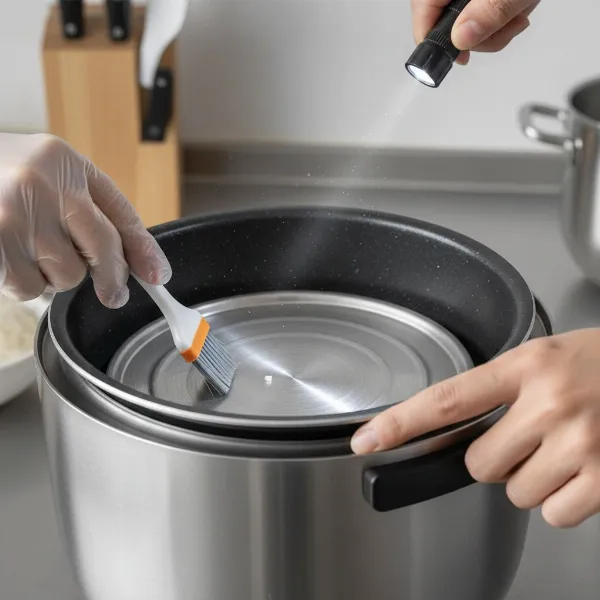 Troubleshooting an E02 error on a rice cooker by checking the inner pot and heating element
When to Seek Professional Help for “E02”
If the “E02” error persists after cleaning the heating plate and ensuring the inner pot is correctly seated, it may indicate a more serious issue with the heating element or internal circuitry. In such cases, or if you notice burning smells or unusual noises, discontinue use immediately and contact a qualified service technician or the manufacturer for assistance.
General Tips for Rice Cooker Maintenance to Prevent Errors
Proactive maintenance can significantly extend the lifespan of your rice cooker and prevent common error codes.
- Regular Cleaning: Routinely clean the inner pot, inner lid, steam vent, and the exterior of your rice cooker. Pay special attention to the heating plate at the bottom and the surrounding area, ensuring no food particles accumulate.
- Proper Handling: Always place the inner pot gently into the rice cooker. Avoid slamming the lid shut, which can damage the lid lock mechanism or sensors.
- Avoid Liquid Spills: Be cautious when adding water or ingredients to prevent spills onto the heating element or control panel, which can lead to electrical issues and errors.
- Store Properly: Store your rice cooker in a dry, clean place. Ensure the lid is slightly ajar when not in use to allow for air circulation and prevent moisture buildup, which can affect electronic components.
- Read the Manual: While this guide covers commonalities, always refer to your specific rice cooker’s user manual for brand-specific error code meanings and troubleshooting steps.
Comparison of E01 and E02 Errors
Understanding the subtle differences and commonalities between these two error codes can help in quicker diagnosis.
| Feature | E01 Error | E02 Error |
|---|---|---|
| Primary Causes | Temperature sensor, lid lock mechanism, broken sensor wire | Inner pot seating, debris, heating element, (sometimes temp sensor) |
| Symptoms | Will not start cooking, lid not recognized, specific lid-related sounds | Will not start cooking, no heat, burning smell (if debris present), incorrect cooking |
| Initial Steps | Check lid closure/alignment, power cycle, clean sensors | Check inner pot seating, clean debris from heating plate, power cycle |
| Severity | Moderate to high (can involve internal wiring or sensor replacement) | Moderate to high (can involve heating element damage or sensor replacement) |
Ensuring Longevity: Quality Rice Cooker Brands and Support
Investing in a reputable rice cooker brand often means better quality components and more readily available customer support. Brands known for their durability typically offer comprehensive troubleshooting guides and accessible service centers, which can be invaluable when facing persistent error codes. When purchasing a new rice cooker, consider the brand’s reputation for reliability and the availability of spare parts and repair services. This approach helps ensure that your appliance is a long-term companion in your kitchen.
Common Misconceptions About Rice Cooker Errors
It’s easy to assume the worst when an error code appears, but many issues are simpler than they seem. A common misconception is that an error code always signifies a major breakdown requiring a complete replacement. In reality, a significant number of errors, including “E01” and “E02,” can be resolved with basic troubleshooting steps like power cycling, cleaning, or ensuring proper component placement. Another misconception is that all error codes across different brands mean the exact same thing; while there are common themes, specific meanings and solutions can vary. Always remember that minor issues often have simple fixes, saving you the expense and hassle of buying a new appliance.
Conclusion
Encountering “E01” or “E02” error codes on your rice cooker can be an unexpected disruption to your meal preparation. However, by understanding that “E01” is frequently tied to temperature sensors or lid-related issues, and “E02” often points to inner pot seating, debris, or heating element concerns, you can approach the problem with confidence. Simple troubleshooting steps—such as power cycling, ensuring proper lid and pot placement, and diligent cleaning—can often resolve these common malfunctions. Always prioritize safety and do not hesitate to reach out to professional service technicians if issues persist or if you suspect internal damage. With proper care and a systematic approach to troubleshooting, your rice cooker can continue to be a reliable cornerstone of your kitchen for years to come.
What steps have you found most effective when troubleshooting common rice cooker errors?
Frequently Asked Questions
What if my rice cooker shows E01 but the lid seems fine?
Even if the lid appears closed, the E01 error might persist due to a faulty lid lock sensor or a broken internal wire connecting the sensor. Check for perfect alignment and any debris, and if the issue continues, it could indicate an internal sensor malfunction requiring professional inspection.
Can E02 error be caused by a dirty heating plate?
Yes, absolutely. A dirty heating plate with trapped food particles or liquids can interfere with the inner pot’s contact with the heating element or the underlying temperature sensor, leading to an E02 error. Always ensure the heating plate is clean and dry.
Is it safe to use a rice cooker after an E01/E02 error?
It is generally not recommended to use a rice cooker that is displaying an error code, as it indicates a malfunction that could affect safety or proper cooking. Always troubleshoot and resolve the error before resuming use to ensure the appliance operates safely and effectively.
How often should I clean my rice cooker to prevent errors?
For optimal performance and to prevent common errors, it’s advisable to clean your rice cooker’s inner pot, lid, and steam vent after every use. A more thorough cleaning of the exterior and around the heating plate should be done weekly or bi-weekly, depending on usage frequency.