The quest for perfectly cooked rice often leads home cooks to explore the world of premium rice cookers. In this culinary journey, two names consistently rise to the top as the undisputed Japanese giants: Tiger and Zojirushi. With over a decade of experience in the rice cooker industry, from basic models to high-tech marvels, I’ve personally tested and evaluated countless products. My goal is to share practical knowledge and real-world experience to help you navigate this comparison and choose the perfect rice cooker for your family’s needs.
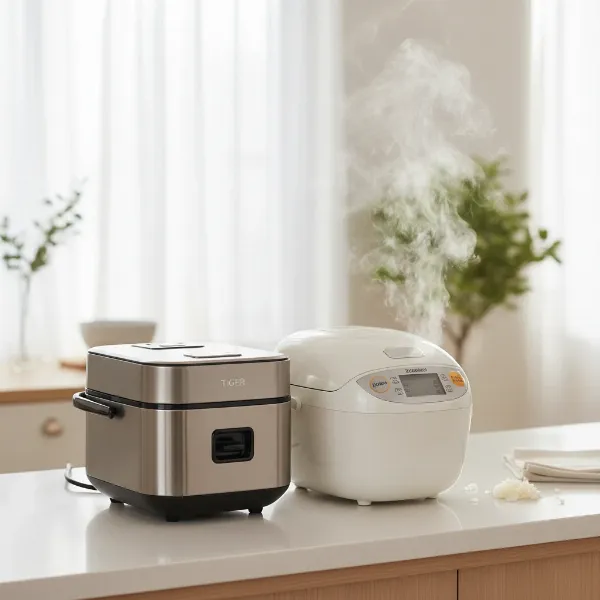 Two Japanese rice cookers, Tiger and Zojirushi, side-by-side, showcasing their sleek designs and digital displays.
Understanding Japanese Rice Cooker Technology
Modern rice cookers are far more sophisticated than simple heating elements in a pot. They have evolved significantly from their basic ancestors, now incorporating advanced technologies to achieve superior cooking results. Understanding these innovations is key to appreciating the differences between brands like Tiger and Zojirushi.
At their core, there are several main types of rice cookers available today. Conventional models are the most basic, using a simple heating plate that turns off once the rice is cooked. Stepping up, Micom (Microcomputerized) Fuzzy Logic rice cookers use a microchip to make intelligent adjustments to cooking time and temperature based on the type of rice, quantity, and even ambient conditions, ensuring consistently good results. Induction Heating (IH) models take heat distribution to the next level by using magnetic fields to heat the entire inner pot, rather than just the bottom. This method provides incredibly even and precise temperature control. The most advanced models, like some from Zojirushi, feature Pressure Induction Heating, which combines IH with pressure to cook rice at higher temperatures, transforming the starch structure for an even softer, more palatable texture.
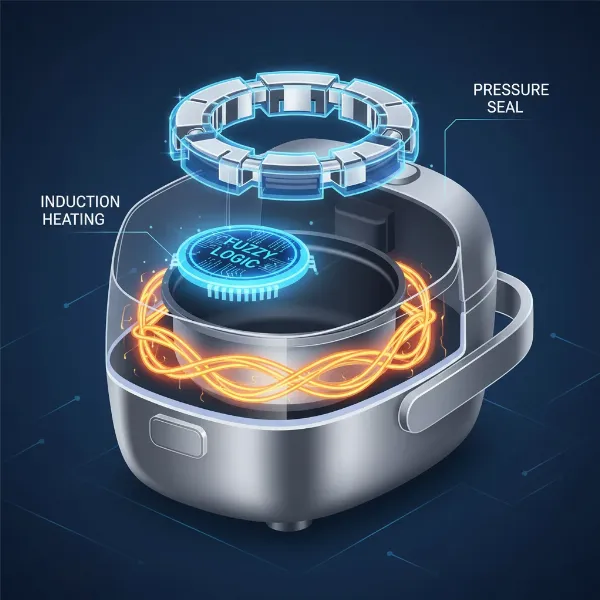 Illustrates fuzzy logic, IH, and pressure cooking elements in a rice cooker.
Choosing Your Ideal Rice Cooker: Tiger vs. Zojirushi
Deciding between Tiger and Zojirushi means weighing their unique strengths against your personal cooking style and kitchen demands. Both brands excel at making great rice, but they cater to slightly different priorities. Let’s explore the factors that will help you make an informed decision.
Determine Your Cooking Needs
|
Our Picks for the Best Rice Cooker in 2026
As an Amazon Associate I earn from qualifying purchases.
|
||
| Num | Product | Action |
|---|---|---|
| 1 | Instant Pot 4QT RIO Mini 7-in-1 Multi-Cooker, Pressure Cooker, Slow cook, Sauté, Steam, Rice Maker, Yogurt, & Warmer, Sea Salt, 4 Quarts |

|
| 2 | AROMA® Mini Rice Cooker, 2-Cup (Uncooked) / 4-Cup (Cooked), Grain Cooker, Soup Maker, Oatmeal Cooker, Auto Keep Warm, 1 Qt, Light Green |
|
| 3 | Aroma Housewares 4-Cups (Cooked) / 1Qt. Rice & Grain Cooker (ARC-302NGBL), Blue |
|
| 4 | BLACK+DECKER Rice Cooker 6-Cup (Cooked) with Steaming Basket, Removable Non-Stick Bowl, White |
|
| 5 | COMFEE' Compact Rice Cooker, 6-in-1 Stainless Steel Multi Cooker, Slow Cooker, Steamer, Saute, and Warmer, 2 QT, 8 Cups Cooked(4 Cups Uncooked), Brown Rice, Quinoa and Oatmeal, 6 One-Touch Programs |
|
| 6 | COSORI Rice Cooker 10 Cup, 24h Keep Warm, Non-stick Ceramic Inner Pot, 18 Functions Fuzzy Logic Rice Maker with Stainless Steel Steamer Basket, Sauté, Slow Cooker, Black |
|
| 7 | AROMA® Mini Rice Cooker, 2-Cup (Uncooked) / 4-Cup (Cooked), Grain Cooker, Soup Maker, Oatmeal Cooker, Auto Keep Warm, 1 Qt, Milk Tea color |
|
| 8 | Zojirushi Micom 3-Cup Compact Size, Multiple Settings, Stainless Steel Made, Built-In Retractable Power Cord and Easy to Transport Rice Cooker and Warmer |
|
| 9 | AROMA Digital Rice Cooker, 4-Cup (Uncooked) / 8-Cup (Cooked), Steamer, Grain Cooker, Multicooker, 2 Qt, Stainless Steel Exterior, ARC-914SBD |
|
| 10 | AROMA® Select Stainless® Rice Cooker, 3-Cup (Uncooked) / 6-Cup (Cooked), Stainless Steel Inner Pot, Small Rice Cooker, Auto Keep Warm, 1.2 Qt, White, ARC-753SG |
|
Before diving into features, consider how you’ll use your rice cooker daily. The size of your family and how often you cook rice will influence the ideal capacity, whether it’s a compact 3-cup model for solo meals or a large 10-cup unit for big gatherings. Your desired rice quality is also a major factor; are you seeking everyday, consistently good rice, or do you crave restaurant-quality perfection with every grain? Furthermore, assess your versatility requirements – do you only need to cook rice, or would you benefit from multi-cooking functions like steaming, slow cooking, or preparing entire main dishes? Lastly, consider your budget, distinguishing between the upfront cost and the long-term value a rice cooker offers.
Key Differentiators: Tiger’s Strengths
Tiger rice cookers are often celebrated for their practical features that cater to the demands of a busy household. One of their most significant advantages is speed and convenience, with many models cooking white rice in as little as 35-45 minutes, significantly faster than some of their Zojirushi counterparts. This efficiency is a huge plus for hectic mornings or quick weeknight dinners.
Perhaps Tiger’s most unique selling point is its Tacook synchronized cooking function. This innovative feature allows you to cook rice in the bottom pot while simultaneously steaming a main dish (like fish or vegetables) in an upper plate, all without any flavor transfer. This multi-cooking capability saves time and effort, making it possible to prepare a complete meal in one appliance. Tiger also prides itself on a user-friendly interface with simpler, often one-touch controls, making it very accessible for beginners or those who prefer straightforward operation. Finally, Tiger generally offers more affordable entry price points, providing excellent quality without the premium cost associated with some high-end models.
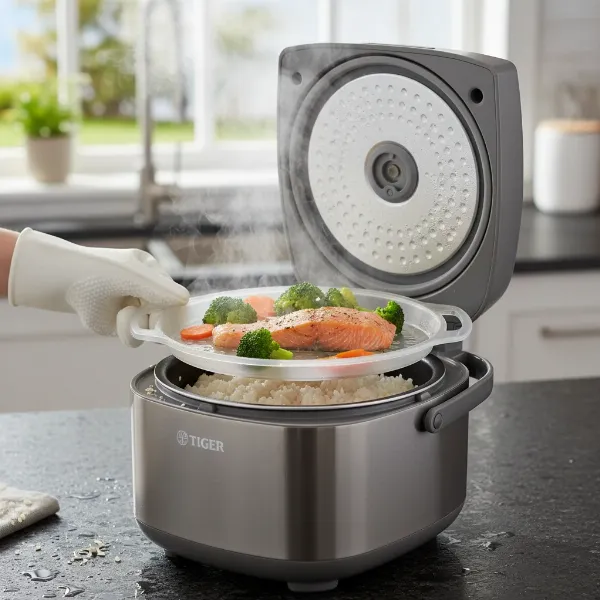 A Tiger rice cooker using its Tacook plate to cook rice and a main dish simultaneously.
Key Differentiators: Zojirushi’s Strengths
Zojirushi rice cookers are the choice for connoisseurs who prioritize the absolute best rice texture and flavor. Their models leverage advanced fuzzy logic, Induction Heating (IH), and sometimes pressure cooking to achieve unmatched consistency and fluffiness, often described as restaurant-quality perfection. If you frequently prepare large batches or enjoy rice throughout the day, Zojirushi’s extended keep warm function is a game-changer, capable of keeping rice fresh and moist for up to 24 hours without drying out.
The brand also offers more advanced cooking presets, including specialized modes like GABA brown rice, which soaks the grains at an optimal temperature to activate nutrients, and options for white rice with varying textures (softer or harder). In terms of durability and build quality, Zojirushi often uses thicker stainless steel inner pots with robust non-stick coatings, contributing to a longer average lifespan of 10-15 years. Their design also emphasizes ease of cleaning, featuring detachable inner lids and sometimes a self-cleaning function to tackle mineral buildup effortlessly.
 A bowl of perfectly cooked, fluffy white rice emphasizing superior texture.
Inner Pot Material: A Closer Look
The inner pot is where the magic happens, and its material and coating are crucial for both cooking performance and longevity. Tiger typically utilizes aluminum inner pots with a fluorine-based non-stick coating. While these pots heat up quickly and provide efficient cooking, some users report that the non-stick coating may show signs of degradation or peeling after 2-3 years of regular use. Replacement pots are generally available and affordable.
Zojirushi, on the other hand, often features thicker, more robust inner pots made from stainless steel with advanced non-stick or platinum-infused coatings. These materials are engineered for superior durability, with coatings typically lasting 5+ years with proper care and significantly less risk of peeling. This contributes to Zojirushi’s reputation for longer overall appliance lifespan and consistent performance over many years.
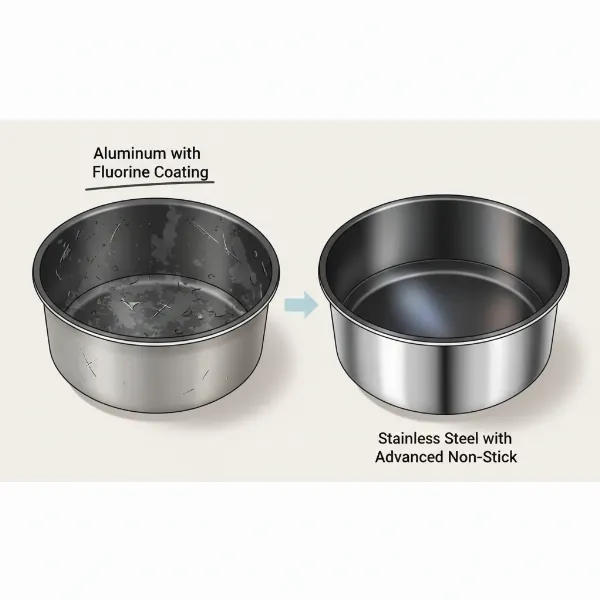 Shows a comparison of different inner pot materials and coatings for rice cookers.
Special Features and Innovations
Beyond the core cooking capabilities, both Tiger and Zojirushi integrate innovative features that enhance the user experience. Tiger’s standout innovation is undoubtedly the Tacook synchronized cooking plate, allowing for simultaneous preparation of rice and a main dish. This multi-functional aspect is perfect for those seeking efficiency and variety from a single appliance.
Zojirushi focuses its innovation on refining the rice-cooking process to an art form. Their Neuro Fuzzy logic represents an advanced evolution of microcomputerized cooking, making precise adjustments with an accuracy of ±1°C for flawless results. Many Zojirushi models also boast a Triple Heater system (heating from the bottom, side, and lid) for unparalleled heat distribution, a dedicated GABA brown rice mode to enhance nutritional benefits, and even a self-cleaning cycle that dissolves mineral buildup. These features highlight Zojirushi’s commitment to achieving perfect rice quality and maximizing convenience through sophisticated technology.
Comparative Analysis Table: Tiger vs. Zojirushi
To simplify your decision, here’s a detailed comparison of key aspects between these two Japanese giants:
| Feature | Tiger | Zojirushi |
|---|---|---|
| Cooking Speed | Faster (35-45 min white rice avg.) | Slower, more precise (59+ min white rice avg.) |
| Rice Texture | Consistently good, reliable | Superior, often described as restaurant-quality |
| Inner Pot Material | Aluminum with fluorine non-stick coating | Stainless steel with advanced non-stick/platinum |
| Coating Durability | ~2-3 years, potential for peeling | ~5+ years, minimal peeling |
| Heating Technology | Micom (Microcomputerized), some IH models | Micom, IH, Pressure IH, Triple Heater system |
| Unique Feature | Tacook (synchronized cooking rice & main dish) | Extended Keep Warm (up to 24 hrs), GABA mode, Self-Cleaning |
| Versatility | Good, multi-cooking via Tacook and presets | Extensive presets for various rice types & textures |
| Ease of Use | Simple, intuitive controls, beginner-friendly | More advanced, detailed settings, steeper learning curve |
| Keep Warm | Standard 12 hours, good retention | Extended 24 hours, superior moisture retention |
| Cleaning | Some models with non-detachable lids, crevices | All models with detachable lids, self-clean cycle available |
| Price Range | More affordable ($110-$400 USD) | Premium ($165-$700+ USD) |
| Lifespan (Avg) | 5-7 years | 10-15 years |
| Ideal User | Busy families, budget-conscious, multi-taskers | Rice connoisseurs, meal preppers, tech-savvy |
Where to Buy Japanese Rice Cookers
When you’re ready to invest in a high-quality Japanese rice cooker, you have several reliable purchasing options. Major online retailers like Amazon, as well as specialized kitchen appliance stores, are excellent places to start. Many brands also offer their products directly through their official websites, which can provide comprehensive product information and direct customer support.
Regardless of where you purchase, always prioritize retailers that offer clear warranty policies, fair return processes, and responsive customer service. These factors are crucial for a smooth buying experience and peace of mind with your investment. Checking customer reviews on various platforms can also provide insights into specific models and seller reliability.
Maximizing Your Rice Cooker’s Lifespan and Performance
To ensure your Tiger or Zojirushi rice cooker continues to perform at its best for years, proper care and maintenance are essential. Regular cleaning, especially of detachable parts like the inner lid and steam vent, prevents mineral buildup and maintains hygiene. Always use soft sponges and non-abrasive cleaners to protect the non-stick coating of the inner pot.
When handling the inner pot, avoid metal utensils, which can scratch the surface, and store it carefully to prevent dings or dents. If you encounter common issues like rice sticking, ensure you’re using the correct water-to-rice ratio and appropriate cooking mode. Uneven cooking might indicate a need for a deeper clean or a check of the heating element if the issue persists. Following the manufacturer’s instructions diligently will significantly extend your appliance’s lifespan and ensure consistently perfect rice.
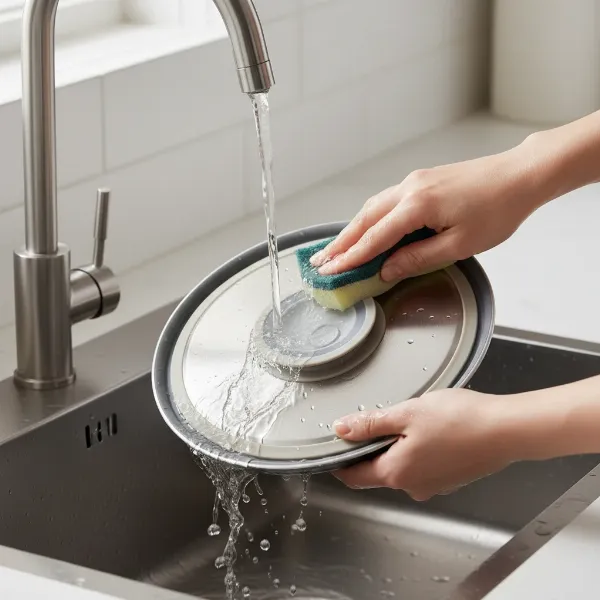 A person cleaning a rice cooker with a detachable inner lid.
Conclusion
The battle between Tiger and Zojirushi is not about which brand is inherently “better,” but rather which aligns more closely with your culinary needs and preferences. Both Japanese giants offer exceptional quality, reliability, and innovative technologies that elevate the humble act of cooking rice into an art form.
If speed, multi-tasking with unique features like Tacook, and a more budget-friendly entry point are your priorities, then a Tiger rice cooker will be a fantastic addition to your kitchen. However, if you demand unparalleled rice texture perfection, extended freshness, advanced technological precision, and long-term durability, a Zojirushi model, despite its higher investment, will undoubtedly be worth every penny. Ultimately, the choice depends on your lifestyle, your passion for perfect rice, and your kitchen philosophy. Which Japanese giant will you invite into your home to transform your rice-cooking experience?
Frequently Asked Questions
Is Zojirushi better for brown rice?
Zojirushi often excels with brown rice, especially models with a dedicated GABA brown rice setting. This mode typically includes a longer soaking period at a specific temperature before cooking, which can result in a softer, sweeter, and more nutritious brown rice texture compared to standard cooking.
Can you cook other things besides rice in these?
Absolutely! Many Tiger models feature the unique Tacook synchronized cooking plate for preparing a main dish while rice cooks. Zojirushi and Tiger also offer various multi-functional settings like slow cook, steam, porridge, oatmeal, and even cake, making them versatile kitchen appliances beyond just rice.
Why are Japanese rice cookers so expensive?
Japanese rice cookers, particularly models from Tiger and Zojirushi, are known for their advanced technology (Micom Fuzzy Logic, IH, Pressure IH), superior build quality, durable inner pot materials, and precise temperature control. These innovations ensure consistently perfect rice, greater versatility, and an extended lifespan, justifying their higher price point as a long-term investment.
How long do Tiger and Zojirushi rice cookers last?
Tiger rice cookers generally have an average lifespan of 5-7 years, offering solid durability for their price. Zojirushi models, known for their premium construction and robust materials, typically boast a longer average lifespan of 10-15 years, often becoming a staple in kitchens for over a decade with proper care.
What is the Tacook feature?
The Tacook feature, exclusive to many Tiger rice cookers, allows users to cook rice in the main pot and a main dish (like meat, fish, or vegetables) simultaneously in a separate, specially designed cooking plate that sits above the rice. This innovation ensures that flavors do not intermingle, providing a complete, balanced meal from one appliance.