For countless households worldwide, the rice cooker isn’t just an appliance; it’s a daily cornerstone, ensuring perfectly cooked rice with minimal effort. When investing in such a crucial kitchen tool, durability and longevity often rank high on a buyer’s checklist. Two Japanese powerhouses, Panasonic and Tiger, have long dominated the market, each boasting a reputation for quality. But when it comes to the ultimate test – which brand truly lasts longer?
An Overview of Rice Cookers
A rice cooker simplifies the art of cooking rice, consistently delivering ideal texture and taste. Originally simple devices, modern rice cookers have evolved significantly, integrating advanced technologies to cater to diverse culinary needs.
Traditionally, mechanical rice cookers operate with a basic thermostat that switches to a “keep warm” mode once the water is absorbed and the cooking temperature is reached. These models are often lauded for their straightforward design and inherent robustness. The evolution led to electronic (Micom/Fuzzy Logic) rice cookers, which employ microcomputers to adjust cooking cycles based on rice type and quantity, ensuring more precise results. Further innovation brought about Induction Heating (IH) rice cookers, utilizing magnetic fields to heat the entire inner pot, leading to superior temperature control and more evenly cooked rice. Each advancement aims to enhance cooking performance and user convenience, influencing not only the cooking process but also the lifespan of the appliance.
Understanding Rice Cooker Lifespan
The typical lifespan of a good-quality rice cooker generally falls between five to ten years with regular use. However, this can fluctuate significantly based on several critical factors. Some users have reported mechanical models lasting over a decade, while modern, more complex units might see a shorter life of two to six years if not properly maintained. Many consumers, when surveyed, anticipate their rice cooker to serve them reliably for seven to ten years before needing a replacement.
Factors such as frequency of use, adherence to maintenance guidelines, and the overall build quality profoundly influence how long your rice cooker will stand the test of time. A heavily used appliance, for example, might reach its end-of-life sooner than one used occasionally. Similarly, neglecting routine cleaning or using abrasive tools on non-stick surfaces can accelerate wear and tear, shortening the appliance’s operational life. Ultimately, understanding these elements is crucial for maximizing your rice cooker’s durability, regardless of brand.
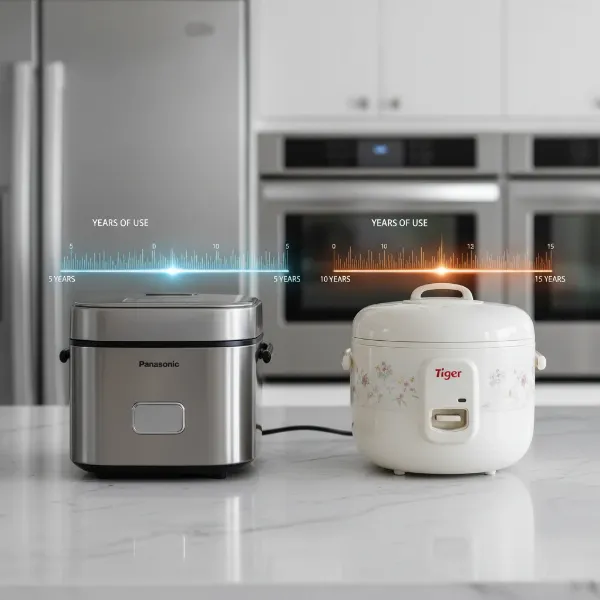 An illustration comparing the lifespan of two rice cookers, one labeled Panasonic and the other Tiger, on a timeline to show their durability over time.
Panasonic Rice Cooker Durability
Panasonic has long been a trusted name in electronics, and their rice cookers uphold this reputation for quality and longevity. Many users report Panasonic models exceeding typical lifespan expectations, with anecdotal evidence of appliances lasting 10, 15, and even 20 years, continuing to function reliably. These long-term positive experiences often stem from the brand’s commitment to using quality materials and incorporating advanced “fuzzy logic” technology, which contributes to consistent performance over time.
For instance, a significant number of consumers recall older “National” branded rice cookers (now Panasonic) purchased two decades ago that are still in active service, cooking rice without issues. This speaks volumes about the enduring build quality embedded in Panasonic’s design philosophy. Even simpler, older Panasonic models are noted to last eight or more years with appropriate care, demonstrating the brand’s fundamental durability across its product range. While newer models feature sophisticated cooking technologies, Panasonic generally maintains a high standard for durability, ensuring a dependable kitchen companion for many years.
Tiger Rice Cooker Durability
Tiger Corporation also stands as a pillar of Japanese engineering, consistently delivering rice cookers known for their durability and affordability. Many satisfied customers highlight Tiger rice cookers as essential “family staples,” often noting that these appliances are passed down through generations, a testament to their robust construction. This longevity is further reinforced by Tiger’s unwavering commitment to “Made in Japan” production, emphasizing stringent quality control throughout the manufacturing process.
A key indicator of Tiger’s dedication to durability is their policy of holding repair parts for 10 years after a product is discontinued, which significantly surpasses the industry standard of six years. This extended availability of parts provides consumers with greater confidence in their investment, knowing that potential repairs can extend the appliance’s life considerably. User experiences frequently laud Tiger cookers for their reliability, with many reporting units lasting seven to ten years, and some even celebrating a remarkable “20 years and still going strong.” While some users have reported variations in newer models, the general consensus reinforces Tiger’s reputation for building appliances that are genuinely “built to last,” particularly regarding internal components like the cooking pot and heating plate.
Key Factors Influencing Longevity in Both Brands
Beyond brand reputation, specific design and user-related factors play a crucial role in determining how long a rice cooker, whether Panasonic or Tiger, will truly last.
Inner Pot Material and Care
|
Our Picks for the Best Rice Cooker in 2026
As an Amazon Associate I earn from qualifying purchases.
|
||
| Num | Product | Action |
|---|---|---|
| 1 | COSORI Rice Cooker 10 Cup, 24h Keep Warm, Non-stick Ceramic Inner Pot, 18 Functions Fuzzy Logic Rice Maker with Stainless Steel Steamer Basket, Sauté, Slow Cooker, Black |

|
| 2 | Zojirushi Micom 3-Cup Compact Size, Multiple Settings, Stainless Steel Made, Built-In Retractable Power Cord and Easy to Transport Rice Cooker and Warmer |
|
| 3 | AROMA® Mini Rice Cooker, 2-Cup (Uncooked) / 4-Cup (Cooked), Grain Cooker, Soup Maker, Oatmeal Cooker, Auto Keep Warm, 1 Qt, Light Green |
|
| 4 | AROMA® Select Stainless® Rice Cooker, 3-Cup (Uncooked) / 6-Cup (Cooked), Stainless Steel Inner Pot, Small Rice Cooker, Auto Keep Warm, 1.2 Qt, White, ARC-753SG |
|
| 5 | BLACK+DECKER Rice Cooker 6-Cup (Cooked) with Steaming Basket, Removable Non-Stick Bowl, White |
|
| 6 | AROMA® Mini Rice Cooker, 2-Cup (Uncooked) / 4-Cup (Cooked), Grain Cooker, Soup Maker, Oatmeal Cooker, Auto Keep Warm, 1 Qt, Milk Tea color |
|
| 7 | Instant Pot 4QT RIO Mini 7-in-1 Multi-Cooker, Pressure Cooker, Slow cook, Sauté, Steam, Rice Maker, Yogurt, & Warmer, Sea Salt, 4 Quarts |
|
| 8 | Aroma Housewares 4-Cups (Cooked) / 1Qt. Rice & Grain Cooker (ARC-302NGBL), Blue |
|
| 9 | AROMA Digital Rice Cooker, 4-Cup (Uncooked) / 8-Cup (Cooked), Steamer, Grain Cooker, Multicooker, 2 Qt, Stainless Steel Exterior, ARC-914SBD |
|
| 10 | COMFEE' Compact Rice Cooker, 6-in-1 Stainless Steel Multi Cooker, Slow Cooker, Steamer, Saute, and Warmer, 2 QT, 8 Cups Cooked(4 Cups Uncooked), Brown Rice, Quinoa and Oatmeal, 6 One-Touch Programs |
|
The inner pot is perhaps the most vulnerable component of any rice cooker. Most modern pots feature a non-stick coating, essential for easy cleaning and preventing rice from sticking. However, this coating can degrade over time if not properly maintained. Using metal utensils, abrasive scrubbers, or washing the pot in a dishwasher (if not specified as dishwasher-safe) can scratch and damage the non-stick surface, leading to flaking. Once the coating begins to flake, it not only affects cooking performance but also raises concerns about food safety, often necessitating the replacement of the pot or the entire cooker. Proper care, such as using only plastic or wooden utensils and gentle handwashing, is paramount to preserving the integrity of the inner pot.
Heating Technology
The type of heating technology employed in a rice cooker also influences its potential longevity.
- Mechanical Rice Cookers: These simpler models often have fewer electronic components, making them less susceptible to complex electrical failures. Their robust, basic design can contribute to a longer operational life, as user anecdotes of 10+ year mechanical cookers suggest.
- Micom (Fuzzy Logic) Rice Cookers: These incorporate microprocessors for intelligent cooking. While offering superior cooking precision, the increased electronic complexity introduces more potential points of failure compared to purely mechanical units. However, reputable brands like Panasonic and Tiger integrate high-quality electronics to mitigate this risk.
- Induction Heating (IH) Rice Cookers: Representing the pinnacle of rice cooker technology, IH models provide excellent heating consistency. The technology itself is generally robust, but like Micom models, they rely on advanced electronics which require high manufacturing standards to ensure long-term reliability.
Usage and Maintenance
Consistent and appropriate usage, coupled with diligent maintenance, can significantly extend a rice cooker’s life. Overstuffing the cooker with ingredients can strain the heating element and other internal components. Regular cleaning of all removable parts, including the lid, inner pot, and steam vent, prevents build-up that could impact performance or cause malfunctions. Furthermore, ensuring the exterior and heating plate are free from spills and debris protects the electrical components. Simple practices, such as unplugging the appliance when not in use and storing it in a cool, dry place, contribute to its overall durability.
Panasonic vs. Tiger: A Durability Comparison
When evaluating Panasonic and Tiger for longevity, both brands demonstrate strong commitments to producing durable rice cookers. However, subtle differences emerge from user experiences and brand policies.
| Feature | Panasonic | Tiger | Notes |
|---|---|---|---|
| Reported Lifespan | Many users report 10-20+ years, particularly older models. | Many users report 7-10 years, some up to 20 years. | Both excel in long-term performance. |
| Parts Availability | General good support, but specific policies less publicized. | 10-year repair parts retention (exceeds industry standard). | Tiger’s explicit policy offers greater assurance for repairs. |
| Core Technology | Strong reliance on Fuzzy Logic for consistent cooking. | Emphasizes “Made in Japan” quality, includes Micom and IH models. | Both use advanced tech, but Tiger stresses manufacturing origin. |
| Inner Pot Durability | Built with quality, but potential issues with specific materials (e.g., Sumiflon in some models). | Generally praised for durability, but prone to wear with improper care. | Non-stick care is crucial for both to prevent flaking. |
| User Sentiment | “Built with quality materials,” “designed for longevity.” | “Family staple,” “passed down through generations,” “good reputation for reliability.” | Both are highly regarded for robust construction. |
Both Panasonic and Tiger have established strong reputations for crafting durable rice cookers that can last for many years, often exceeding a decade. Tiger’s explicit 10-year parts retention policy after product discontinuation offers a tangible advantage for long-term maintainability. Panasonic, while perhaps less vocal about specific repair part policies, consistently receives praise for its robust construction and long-lasting performance in user reviews. Ultimately, the choice between them often comes down to individual feature preferences, as both are reliable contenders in the longevity stakes.
Making Your Rice Cooker Last Longer: Maintenance Tips
To maximize the lifespan of your Panasonic or Tiger rice cooker, proper care and maintenance are indispensable.
- Vệ sinh nồi cơm điện đúng cách (Clean Your Rice Cooker Properly): After each use, allow the inner pot to cool before washing. Use a soft sponge and mild dish soap to clean the non-stick surface. Wipe down the exterior housing with a damp cloth. Regularly clean the lid, especially around the steam vent and gasket, to prevent food residue buildup that can affect sealing and cooking performance.
- Sử dụng và bảo quản lòng nồi để kéo dài tuổi thọ (Use and Store the Inner Pot to Extend Lifespan): Always use the plastic or wooden rice paddle provided with your cooker to avoid scratching the non-stick coating. Never use metal utensils. Store the inner pot inside the cooker or in a safe place where its coating won’t be scratched or damaged by other kitchen items.
- Khắc phục các lỗi thường gặp ở nồi cơm điện (Troubleshoot Common Rice Cooker Issues): If rice sticks to the bottom, ensure proper water-to-rice ratios and adequate rinsing of the rice. If the cooker isn’t heating, check the power connection and consult the manual for troubleshooting steps before assuming a major fault. Address minor issues promptly to prevent them from escalating into larger problems that could compromise the appliance’s overall longevity.
By following these simple yet crucial maintenance steps, you can ensure your rice cooker continues to perform optimally and serves your family for many years to come.
“A well-maintained rice cooker from a reputable brand can become a cherished kitchen heirloom, consistently delivering perfect rice for decades. The secret isn’t just in the initial quality, but in how you treat it every day.” – Lan, Admin of ricecookerhot.com, Rice Cooker Expert
Conclusion
When seeking a rice cooker built for the long haul, both Panasonic and Tiger present compelling options. Our exploration reveals that both Japanese brands have a strong legacy of durability, with numerous users reporting lifespans well over a decade for their beloved appliances. While Panasonic is often praised for its consistent quality and enduring performance, Tiger distinguishes itself with a transparent 10-year parts retention policy and a deep-rooted commitment to “Made in Japan” manufacturing excellence. Ultimately, the choice between them often hinges on specific features and personal preference, as both are engineered to be reliable, long-lasting additions to your kitchen.
So, when you’re ready to make that investment, consider what truly matters to you: is it the brand’s long-standing reputation for robust engineering, or a manufacturer’s explicit promise of extended repair support? Which brand’s legacy of longevity resonates most with your kitchen philosophy?
Frequently Asked Questions
How often should I replace my rice cooker?
The typical lifespan for a quality rice cooker is between 5 to 10 years, with some mechanical models lasting over 10 years and modern ones usually 2-6 years. You should consider replacing it if you notice consistent performance issues, such as burnt rice, improper cooking, or a damaged non-stick inner pot that cannot be replaced.
Does using a rice cooker daily reduce its lifespan?
Daily use can contribute to wear and tear over time, but high-quality rice cookers from brands like Panasonic and Tiger are designed to withstand regular use. Consistent proper maintenance, such as gentle cleaning and avoiding harsh utensils, is more critical than frequency of use in determining overall longevity.
What are the signs that my rice cooker is failing?
Common signs of a failing rice cooker include rice consistently being undercooked or overcooked, uneven heating, the “keep warm” function drying out the rice, the non-stick coating flaking off the inner pot, or the appliance shutting off prematurely during the cooking cycle.
Are Japanese rice cookers generally more durable?
Japanese brands like Panasonic and Tiger (and Zojirushi) are widely recognized for their superior build quality, advanced technology, and rigorous manufacturing standards. This often translates to greater durability and a longer lifespan compared to many generic or cheaper brands.