Are you dreaming of tender, succulent chicken paired with impossibly fragrant rice, all infused with the aromatic essence of ginger and garlic? Hainanese Chicken Rice is a culinary masterpiece, a dish revered for its delicate flavors and comforting simplicity. However, the traditional method often involves multiple pots, precise poaching, and a significant time commitment. But what if you could achieve that same authentic taste and texture with a fraction of the effort? Enter the one-pot Hainanese Chicken Rice, a game-changer for busy home cooks who crave gourmet results without the fuss. This guide will walk you through transforming this classic into an accessible, flavorful, and incredibly satisfying meal, all cooked in a single pot.
The Magic of One-Pot Hainanese Chicken Rice
Hainanese Chicken Rice, originating from Hainan Island, China, and popularized in Southeast Asia, is typically a multi-component meal featuring poached chicken, oily rice cooked in chicken broth, and a trio of dipping sauces. The traditional preparation can be elaborate, involving careful poaching of a whole chicken to yield flavorful broth, then using that broth to cook the rice separately. The one-pot method ingeniously streamlines this process, allowing both the chicken and rice to cook together, infusing every grain with deep, savory chicken flavor and resulting in an exceptionally tender bird. It’s a testament to smart cooking, minimizing cleanup while maximizing taste, making it perfect for weeknight dinners or casual gatherings.
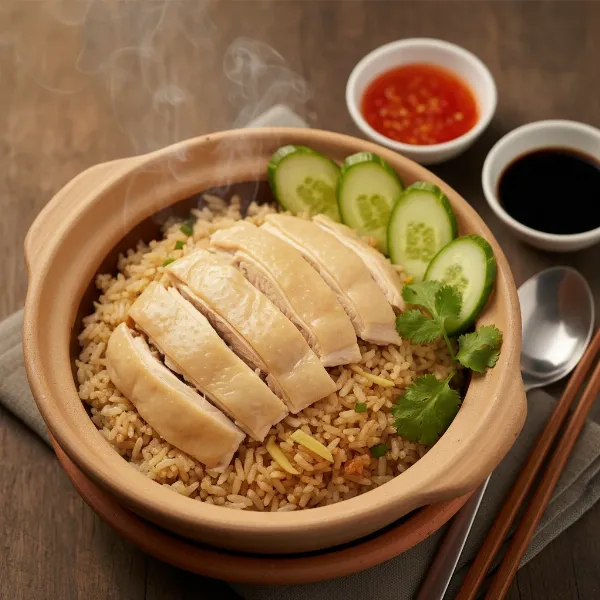 A vibrant and appealing one-pot Hainanese Chicken Rice dish, perfectly cooked, ready to serve.
Gathering Your Essentials: Ingredients for Success
Crafting exceptional one-pot Hainanese Chicken Rice starts with selecting quality ingredients. Each component plays a vital role in building the dish’s signature flavor profile.
Chicken: Cut and Preparation
|
Our Picks for the Best Rice Cooker in 2026
As an Amazon Associate I earn from qualifying purchases.
|
||
| Num | Product | Action |
|---|---|---|
| 1 | COSORI Rice Cooker 10 Cup, 24h Keep Warm, Non-stick Ceramic Inner Pot, 18 Functions Fuzzy Logic Rice Maker with Stainless Steel Steamer Basket, Sauté, Slow Cooker, Black |

|
| 2 | BLACK+DECKER Rice Cooker 6-Cup (Cooked) with Steaming Basket, Removable Non-Stick Bowl, White |
|
| 3 | Zojirushi Micom 3-Cup Compact Size, Multiple Settings, Stainless Steel Made, Built-In Retractable Power Cord and Easy to Transport Rice Cooker and Warmer |
|
| 4 | Aroma Housewares 4-Cups (Cooked) / 1Qt. Rice & Grain Cooker (ARC-302NGBL), Blue |
|
| 5 | AROMA® Mini Rice Cooker, 2-Cup (Uncooked) / 4-Cup (Cooked), Grain Cooker, Soup Maker, Oatmeal Cooker, Auto Keep Warm, 1 Qt, Light Green |
|
| 6 | Instant Pot 4QT RIO Mini 7-in-1 Multi-Cooker, Pressure Cooker, Slow cook, Sauté, Steam, Rice Maker, Yogurt, & Warmer, Sea Salt, 4 Quarts |
|
| 7 | COMFEE' Compact Rice Cooker, 6-in-1 Stainless Steel Multi Cooker, Slow Cooker, Steamer, Saute, and Warmer, 2 QT, 8 Cups Cooked(4 Cups Uncooked), Brown Rice, Quinoa and Oatmeal, 6 One-Touch Programs |
|
| 8 | AROMA Digital Rice Cooker, 4-Cup (Uncooked) / 8-Cup (Cooked), Steamer, Grain Cooker, Multicooker, 2 Qt, Stainless Steel Exterior, ARC-914SBD |
|
| 9 | AROMA® Mini Rice Cooker, 2-Cup (Uncooked) / 4-Cup (Cooked), Grain Cooker, Soup Maker, Oatmeal Cooker, Auto Keep Warm, 1 Qt, Milk Tea color |
|
| 10 | AROMA® Select Stainless® Rice Cooker, 3-Cup (Uncooked) / 6-Cup (Cooked), Stainless Steel Inner Pot, Small Rice Cooker, Auto Keep Warm, 1.2 Qt, White, ARC-753SG |
|
For the one-pot method, bone-in, skin-on chicken thighs or drumsticks are highly recommended. The bones add depth of flavor to the rice, and the skin renders fat, which is crucial for authentic taste and texture. Boneless, skinless thighs can also work for a quicker cook, though you might miss some richness. Marinate the chicken simply with salt, white pepper, and a touch of sesame oil for at least 30 minutes, or ideally, several hours in the refrigerator. This pre-seasoning ensures the chicken itself is flavorful.
Rice: The Foundation of Flavor
Jasmine rice is the quintessential choice for Hainanese Chicken Rice. Its delicate fragrance and soft, slightly sticky texture complement the chicken beautifully. Always rinse your jasmine rice thoroughly under cold running water until the water runs clear. This step removes excess starch, preventing the rice from becoming gummy and ensuring each grain is perfectly separated and fluffy.
Aromatics: Ginger, Garlic, Shallots, and More
These are the soul of your dish. You’ll need a generous amount of fresh ginger, peeled and thinly sliced or smashed. Garlic cloves, similarly peeled and lightly smashed or minced, are also essential. Shallots, finely chopped, add a layer of sweetness and complexity. For an extra authentic touch, consider adding a few pandan leaves, tied into a knot, or a stalk of lemongrass, bruised and halved. These aromatics will be sautéed to release their fragrant oils, building the initial flavor base for your rice.
Liquids and Seasonings
The primary liquid for cooking the rice and chicken is high-quality chicken broth or stock. This is where much of the dish’s savory depth comes from. If using store-bought broth, opt for a low-sodium variety to control the saltiness. A pinch of salt and a dash of white pepper will further season the liquid. Some recipes also suggest a touch of chicken bouillon powder for an extra umami boost. The ratio of liquid to rice is crucial; generally, a 1:1 or 1:1.2 ratio of rice to liquid works well for most rice cookers and stovetop methods, but always check your specific rice cooker’s recommendation.
The Essential Sauces
No Hainanese Chicken Rice is complete without its accompanying sauces. While not cooked in the pot, preparing these fresh dipping sauces elevates the entire meal.
- Ginger-Scallion Oil: A vibrant blend of finely minced ginger and green onions, seasoned with salt and hot oil poured over them to “cook” the aromatics.
- Chili Sauce: A spicy, tangy concoction typically made from red chilies, garlic, ginger, lime juice, and sometimes a hint of sugar and chicken broth.
- Sweet Soy Sauce: A simple mix of dark soy sauce, light soy sauce, and sometimes a touch of sugar or chicken stock.
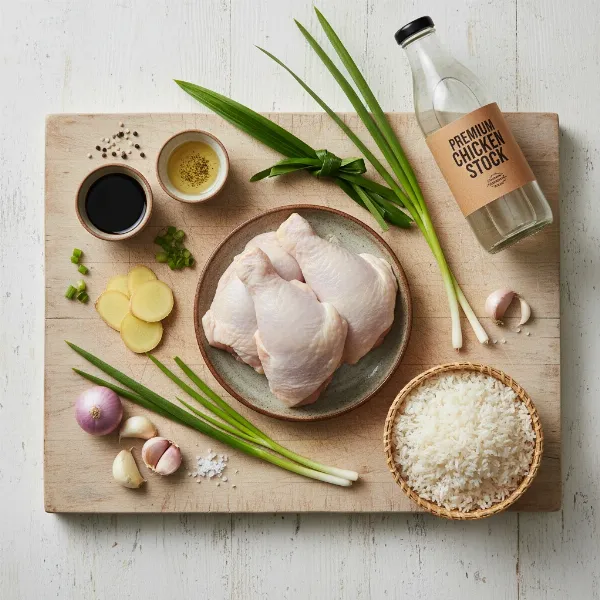 A vibrant display of fresh ingredients for One-Pot Hainanese Chicken Rice laid out on a wooden cutting board.
Choosing Your One-Pot Powerhouse: Stovetop Pot vs. Rice Cooker
The beauty of one-pot Hainanese Chicken Rice lies in its adaptability. You can achieve fantastic results using either a traditional stovetop pot or the convenience of an electric rice cooker. Each method has its unique advantages.
The Versatile Stovetop Method
Cooking on the stovetop offers a classic approach with more hands-on control. A heavy-bottomed pot with a tight-fitting lid is ideal. Cast iron or stainless steel pots work wonderfully, providing even heat distribution and excellent heat retention. The stovetop method allows you to visually monitor the sautéing process and adjust heat levels precisely, which can be beneficial for developing that rich, golden crust on the chicken skin or the bottom of the rice if desired. It’s a great choice if you enjoy the art of cooking and don’t mind a bit more active participation.
The Convenient Rice Cooker Approach
For ultimate ease and consistency, an electric rice cooker is an exceptional tool for one-pot Hainanese Chicken Rice. Modern rice cookers, especially those with “fuzzy logic” or induction heating, can precisely regulate temperature and cooking time, ensuring perfectly cooked rice and tender chicken every time. Many advanced models even have sauté functions, allowing you to render chicken fat and sauté aromatics directly in the inner pot before adding the rice and liquid. Even a basic rice cooker with a “white rice” setting can handle this dish beautifully, though you might need to perform the initial sautéing step in a separate pan before transferring to the rice cooker. The “keep warm” function is also invaluable for allowing the dish to rest, which is crucial for both chicken and rice texture.
Inner Pot Materials: What to Look For
The material of your cooking vessel’s inner pot can influence both the cooking process and cleanup.
- Non-stick coated pots (common in rice cookers) make for effortless serving and cleaning, minimizing sticking.
- Stainless steel or cast iron pots (for stovetop) offer superior heat retention and can help achieve a desirable crispy rice layer at the bottom.
- Ceramic-coated pots provide a natural non-stick surface and are often praised for their even heating.
When selecting, prioritize materials that are food-safe, durable, and free from harmful chemicals, especially if using a non-stick coating. A sturdy, heavy inner pot contributes to better heat distribution and more consistent results.
Capacity Considerations for Your Family
Choosing the right pot or rice cooker capacity is vital to ensure your ingredients cook evenly without overcrowding.
- Small (1-2 servings): Ideal for individuals or couples, typically under 1 liter capacity for rice cookers or a 2-quart pot.
- Medium (3-5 servings): Suitable for average families, usually 1 to 1.8 liters for rice cookers or a 3-4 quart pot.
- Large (6+ servings): Perfect for larger families or entertaining, often 1.8 liters or more for rice cookers, or a 5-6 quart pot.
Ensure there’s enough room for the chicken pieces to nestle comfortably atop the rice without being submerged, allowing them to steam effectively while the rice cooks below.
Step-by-Step: Mastering Your One-Pot Hainanese Chicken Rice Recipe
Follow these simple steps to create a truly unforgettable one-pot Hainanese Chicken Rice experience.
Preparing Your Ingredients
- Marinate Chicken: Pat chicken thighs dry. Rub with 1 teaspoon salt, 1/2 teaspoon white pepper, and 1 tablespoon sesame oil. Let it marinate for at least 30 minutes at room temperature, or covered in the fridge for up to 4 hours.
- Rinse Rice: Rinse 2 cups jasmine rice thoroughly under cold water until the water runs clear. Drain well.
- Prepare Aromatics: Mince 2 inches of ginger and 4 cloves of garlic. Finely chop 1 large shallot. Smash and tie 2-3 pandan leaves (optional). Slice a few rounds of ginger for the pot.
Building the Flavor Base
- Render Chicken Fat (Optional but Recommended): In your chosen pot (stovetop or a rice cooker with a sauté function), add a tablespoon of cooking oil (or chicken fat if you have it). If using chicken with skin, you can cut off a small piece of skin/fat and render it in the pot over medium heat until crispy, then remove the solids. This infuses the oil with chicken flavor.
- Sauté Aromatics: Add the minced ginger, garlic, and chopped shallots to the infused oil. Sauté over medium heat until fragrant, about 2-3 minutes. Be careful not to burn the garlic.
- Toast Rice: Add the rinsed and drained jasmine rice to the pot. Stir constantly for 2-3 minutes, toasting the rice grains until they become slightly translucent and glossy. This step deepens the flavor and prevents mushy rice.
Assembling Your One-Pot Dish
- Add Liquid: Pour in 2.5 cups of chicken broth. Add 1/2 teaspoon of salt and a pinch of white pepper. Stir gently to combine everything at the bottom.
- Nestle Chicken: Place the marinated chicken thighs skin-side up on top of the rice, making sure they are not submerged. Add the sliced ginger rounds and tied pandan leaves around the chicken.
- Add Green Onion Whites: Place the white parts of 2-3 green onions on top of the chicken or nestled next to it.
Cooking Instructions: Stovetop
- Bring the liquid to a boil over medium-high heat.
- Once boiling, reduce the heat to the lowest setting, cover the pot tightly with a lid, and simmer for 18-20 minutes, or until all the liquid is absorbed and the rice is cooked.
- Do not lift the lid during cooking.
Cooking Instructions: Rice Cooker
- Ensure all ingredients (sautéed aromatics, toasted rice, broth, chicken, ginger slices, pandan leaves, green onion whites) are in the inner pot.
- Close the lid and select the “White Rice” or “Regular Cook” setting.
- Allow the rice cooker to complete its cycle.
The Critical Resting Period
This step is non-negotiable for both stovetop and rice cooker methods. Once cooking is complete, turn off the heat (for stovetop) or unplug the rice cooker. Let the dish rest, covered, for at least 10-15 minutes. This crucial resting period allows the rice to steam further, becoming perfectly fluffy, and the chicken to reabsorb its juices, resulting in incredibly tender and moist meat. Resist the urge to peek!
Crafting Your Signature Dipping Sauces
While the chicken and rice are resting, quickly prepare your sauces:
- Ginger-Scallion Sauce: Combine 3 tablespoons finely minced ginger, 2 tablespoons finely chopped green onions (green parts), 1/4 teaspoon salt, and a pinch of sugar. Heat 3 tablespoons neutral oil until smoking hot, then pour it over the mixture. Stir well.
- Chili Sauce: Blend 3-4 red chilies (deseeded for less heat), 2 cloves garlic, 1 inch ginger, 1 tablespoon lime juice, 1 teaspoon sugar, and 2 tablespoons chicken broth until smooth. Season with salt to taste.
- Sweet Soy Sauce: Combine 3 tablespoons dark soy sauce, 2 tablespoons light soy sauce, and 1 tablespoon chicken broth.
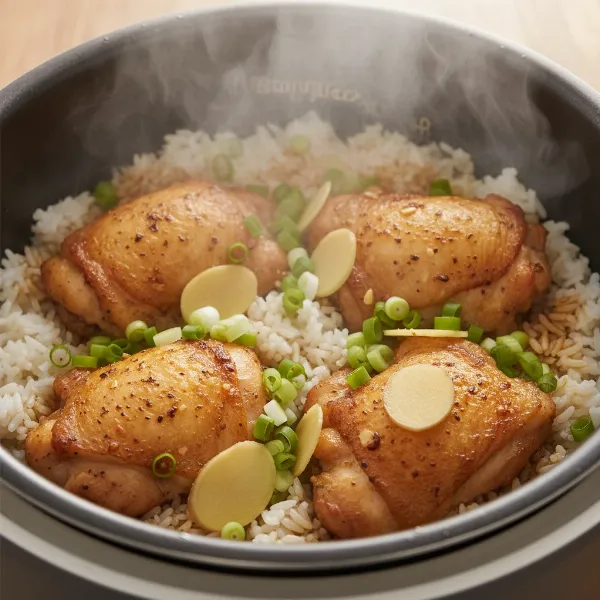 A rice cooker or heavy-bottomed pot filled with chicken, rice, and aromatics, actively cooking.
Troubleshooting and Expert Tips for Perfection
Even with a simple one-pot recipe, a few common issues can arise. Knowing how to prevent them and having expert tips can elevate your dish from good to extraordinary.
Common Issues and Quick Fixes
- Soggy Rice: This usually happens from too much liquid or not enough resting time. Ensure your rice-to-liquid ratio is accurate (typically 1:1 or 1:1.2 for jasmine rice) and always let it rest covered for at least 10-15 minutes after cooking. If it’s still slightly wet, gently fluff with a fork and let it sit uncovered for a few more minutes.
- Dry Chicken: Overcooking is the culprit here. Chicken thighs are more forgiving than breasts, but ensure you don’t cook for too long. The resting period is vital for moisture retention. If your chicken feels dry, ensure your liquid ratio is sufficient for both rice and chicken to steam properly.
- Lack of Flavor: This could be due to insufficient aromatics, using plain water instead of chicken