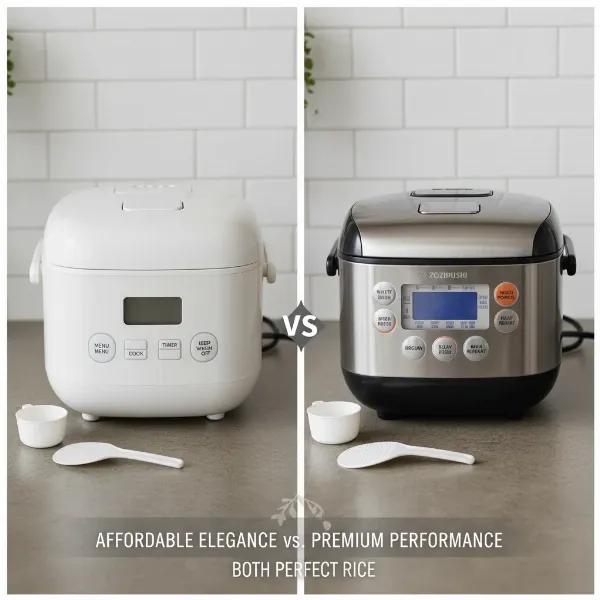
Have you ever wondered why restaurant fried rice always tastes so much better than your homemade attempts? The secret often lies not in exotic ingredients or complex techniques, but in a simple ingredient you might already have in your fridge: leftover rice cooker rice. With over a decade of experience testing and evaluating rice cookers, from basic models to high-tech marvels, I’ve learned that unlocking the full potential of your leftover grains is key to achieving that perfect texture and flavor. This comprehensive guide will transform your weeknight meals, turning ordinary rice into an extraordinary fried rice dish that rivals your favorite takeout.
The Secret to Perfect Fried Rice: Understanding Leftover Rice
Why is day-old rice, particularly from your rice cooker, the star ingredient for truly exceptional fried rice? The fundamental reason is moisture content. Freshly cooked rice retains a significant amount of water, making it soft and sticky. When you attempt to fry wet rice, the excess moisture turns into steam, leading to a mushy, clumpy texture that prevents the grains from getting that coveted crispiness.
Leftover rice, especially after spending time in the refrigerator, undergoes a natural drying process. This reduction in moisture allows the individual grains to separate beautifully during frying, ensuring each one can crisp up and develop a distinct, slightly chewy “al dente” bite. Additionally, a process called starch retrogradation occurs when rice cools, making the starches reorganize into a firmer, more crystalline structure. This structural change helps the grains maintain their integrity under high heat, absorbing the rich flavors of your sauces and aromatics without becoming soggy.
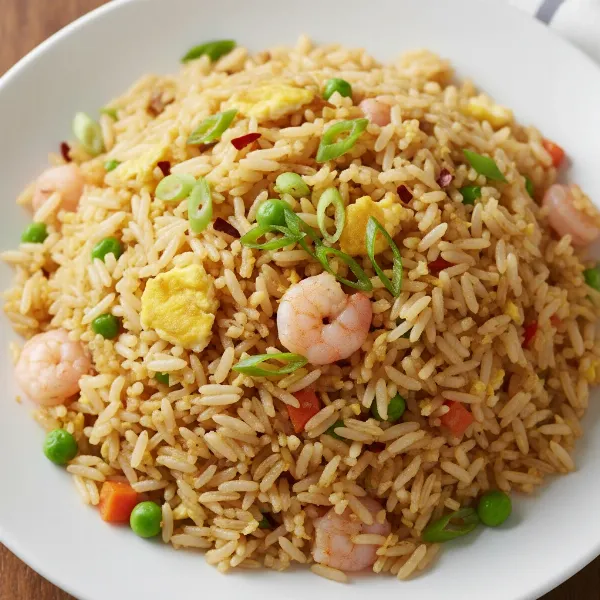 Close-up of perfectly cooked fried rice with individual grains visible, garnished with green onions, showcasing the ideal texture achieved with leftover rice.
Preparing Your Leftover Rice for Frying Success
The journey to perfect fried rice begins before you even turn on the stove, with the proper preparation of your rice. Ensuring your rice is suitably dry and separated is a non-negotiable step for achieving that ideal texture.
Optimal Storage Methods
|
Our Picks for the Best Rice Cooker in 2026
As an Amazon Associate I earn from qualifying purchases.
|
||
| Num | Product | Action |
|---|---|---|
| 1 | COMFEE' Compact Rice Cooker, 6-in-1 Stainless Steel Multi Cooker, Slow Cooker, Steamer, Saute, and Warmer, 2 QT, 8 Cups Cooked(4 Cups Uncooked), Brown Rice, Quinoa and Oatmeal, 6 One-Touch Programs |

|
| 2 | AROMA Digital Rice Cooker, 4-Cup (Uncooked) / 8-Cup (Cooked), Steamer, Grain Cooker, Multicooker, 2 Qt, Stainless Steel Exterior, ARC-914SBD |
|
| 3 | AROMA® Mini Rice Cooker, 2-Cup (Uncooked) / 4-Cup (Cooked), Grain Cooker, Soup Maker, Oatmeal Cooker, Auto Keep Warm, 1 Qt, Light Green |
|
| 4 | BLACK+DECKER Rice Cooker 6-Cup (Cooked) with Steaming Basket, Removable Non-Stick Bowl, White |
|
| 5 | Zojirushi Micom 3-Cup Compact Size, Multiple Settings, Stainless Steel Made, Built-In Retractable Power Cord and Easy to Transport Rice Cooker and Warmer |
|
| 6 | Aroma Housewares 4-Cups (Cooked) / 1Qt. Rice & Grain Cooker (ARC-302NGBL), Blue |
|
| 7 | Instant Pot 4QT RIO Mini 7-in-1 Multi-Cooker, Pressure Cooker, Slow cook, Sauté, Steam, Rice Maker, Yogurt, & Warmer, Sea Salt, 4 Quarts |
|
| 8 | AROMA® Select Stainless® Rice Cooker, 3-Cup (Uncooked) / 6-Cup (Cooked), Stainless Steel Inner Pot, Small Rice Cooker, Auto Keep Warm, 1.2 Qt, White, ARC-753SG |
|
| 9 | COSORI Rice Cooker 10 Cup, 24h Keep Warm, Non-stick Ceramic Inner Pot, 18 Functions Fuzzy Logic Rice Maker with Stainless Steel Steamer Basket, Sauté, Slow Cooker, Black |
|
| 10 | AROMA® Mini Rice Cooker, 2-Cup (Uncooked) / 4-Cup (Cooked), Grain Cooker, Soup Maker, Oatmeal Cooker, Auto Keep Warm, 1 Qt, Milk Tea color |
|
The best practice for preparing rice for fried rice is to plan ahead. When you have freshly cooked rice, immediately spread it out in a thin, even layer on a large baking sheet or a wide plate. Then, place it uncovered in your refrigerator for at least several hours, or ideally, overnight. Leaving it uncovered allows the steam and excess moisture to escape, effectively drying out the surface of the rice grains. For longer storage, you can freeze cooled rice in airtight containers or freezer bags for up to two months, though the texture might be slightly softer upon thawing.
Quick-Drying Fresh Rice (When Time is Short)
Even if you haven’t planned ahead, you can still mimic day-old rice. Spread freshly cooked rice thinly on a baking sheet and pop it into the freezer for about 20 minutes, stirring halfway through. This rapid cooling helps to quickly evaporate surface moisture. Alternatively, after the rice has cooled to room temperature, you can spread it on a baking sheet and place it in an oven set to a very low temperature, around 250°F (120°C), for 10-15 minutes. This gentle heat will effectively dry out the rice without cooking it further.
Pre-Frying Preparation
Before you add your rice to a hot pan, take a moment to break up any large clumps. Using your hands to gently crumble the cold, dry rice will ensure that each grain is separated. This seemingly small step is crucial, as it allows for even cooking and coating with oil and sauces, preventing pockets of mushy, unflavored rice in your final dish.
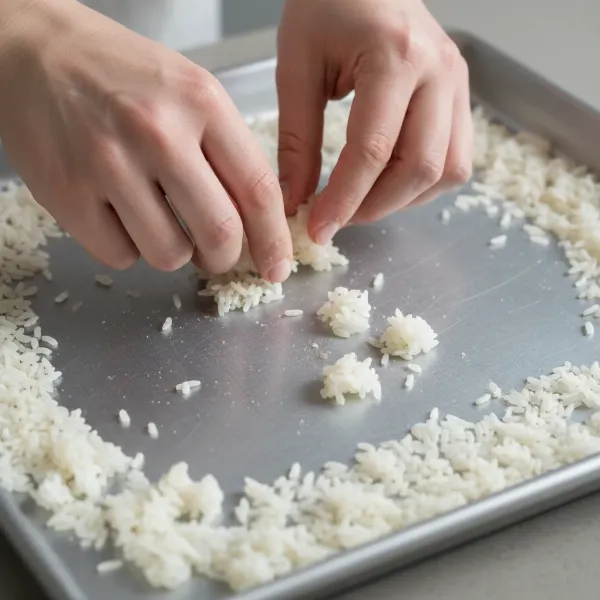 Hands gently breaking apart cold, dry leftover rice on a baking sheet, preparing it for frying in a pan.
Essential Ingredients for Flavorful Fried Rice
Crafting delicious fried rice is a delightful balance of staple ingredients and creative additions. The beauty of this dish lies in its versatility, allowing you to use what you have on hand while ensuring a harmonious blend of flavors and textures.
Choosing the Right Rice
The type of rice you use significantly impacts the final texture of your fried rice. Medium to long-grain white rice varieties, such as Jasmine or Basmati, are generally preferred for their ability to hold shape and remain relatively firm when fried. Jasmine rice offers a slightly sticky texture that separates well, while Basmati provides longer grains and a more aromatic profile. If you prefer brown rice for its nutty flavor and nutritional benefits, cook it slightly “al dente” or with a little less water than usual initially, as it can absorb more liquid during stir-frying.
Proteins and Vegetables
Fried rice is an excellent canvas for various proteins and vegetables. Whisked eggs, scrambled directly in the pan, are a classic addition, creating soft, flavorful curds. Cooked meats like diced chicken, shrimp, ham, or even crumbled bacon add substantial flavor and texture. For plant-based options, roasted tofu, chickpeas, or seitan work wonderfully. When it comes to vegetables, feel free to raid your fridge and freezer. Fresh options like finely chopped carrots, green peas, corn, bell peppers, cabbage, or mushrooms are fantastic. Frozen vegetables like peas and broccoli florets can be added directly to the pan without thawing, making meal prep even quicker.
Aromatics and Sauces
The foundation of fried rice flavor comes from its aromatics and sauces. Minced garlic and fresh ginger provide a fragrant base, while the white parts of green onions add a mild oniony note when sautéed. For seasoning, low-sodium soy sauce is essential for umami and saltiness. Toasted sesame oil, added at the end, provides a rich, nutty aroma. Other popular additions include oyster sauce for a deeper savory profile, a pinch of sugar to balance flavors, and a dash of white pepper for a subtle kick.
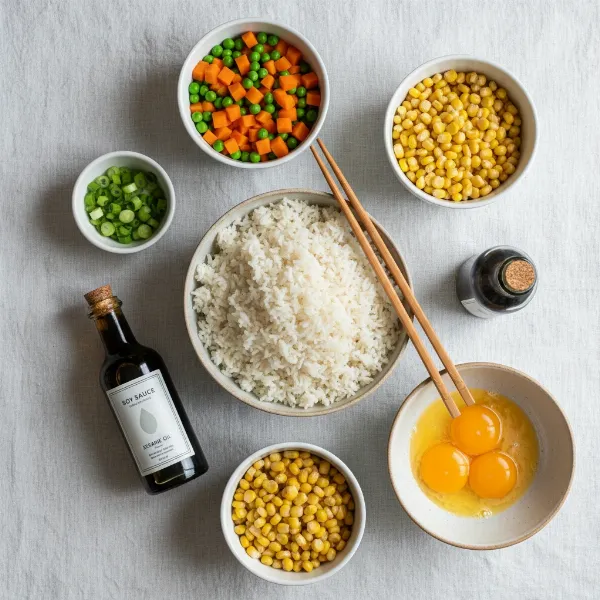 A vibrant flat lay of common fried rice ingredients including leftover rice, whisked eggs, chopped vegetables, and sauces, ready for cooking.
Step-by-Step Guide to Cooking Restaurant-Quality Fried Rice
Transforming your leftover rice into a culinary masterpiece is a straightforward process when you follow a few key steps. High heat, quick movements, and proper layering are all essential for achieving that authentic fried rice taste and texture.
Setting Up Your Workspace (Mise en Place)
Before you even think about heating your pan, ensure all your ingredients are prepped and ready. This “mise en place” (everything in its place) is critical because fried rice cooks very quickly. Have your chopped vegetables, whisked eggs, cooked protein, sauces, and, most importantly, your separated day-old rice all within arm’s reach. This preparation prevents burning and ensures a smooth cooking process, allowing you to focus on technique.
High Heat is Key: Wok vs. Skillet
The key to preventing soggy fried rice is cooking it over high heat. A traditional wok is ideal because its sloped sides provide maximum surface area for cooking and allow for easy tossing. However, a large, heavy-bottomed skillet or cast-iron pan can also yield excellent results. Preheat your pan over medium-high to high heat until it’s shimmering hot, but not smoking, before adding your first tablespoon of neutral oil. This initial high heat sears the ingredients, preventing them from steaming.
Sautéing Aromatics and Proteins
Start by adding a neutral oil, such as avocado or canola oil, to your hot pan. Sauté your aromatics like minced garlic, ginger, and the white parts of green onions until fragrant, which usually takes about 30 seconds to a minute. If you’re using raw protein like shrimp or diced chicken, cook it through at this stage and then remove it from the pan to avoid overcooking. If using cooked protein, you can add it back later with the vegetables.
Incorporating Vegetables and Eggs
Next, add your fresh vegetables, such as carrots and cabbage, and stir-fry them until they are tender-crisp, typically 3-5 minutes. Push the vegetables to one side of the pan, add a little more oil if needed, and pour in your whisked eggs. Scramble the eggs in the empty space until they are just set but still slightly soft, then break them into curds and mix them with the vegetables. Add any frozen vegetables, like peas or corn, during this step, as they will quickly heat through.
Frying the Rice: The “Fold-and-Press” Technique
Now for the star of the show: the rice. Increase the heat to high. Add your cold, separated rice to the pan. Instead of constantly stirring, use a spatula or wok shovel to press the rice down against the hot surface of the pan for about 30 seconds, then fold and stir, repeating this technique. This “fold-and-press” method maximizes contact with the hot pan, promoting the Maillard reaction, which creates those desirable crispy, slightly browned bits and a smoky flavor known as “wok hei.” This is crucial for developing the characteristic texture of fried rice.
Finishing Touches: Sauces and Garnish
Once the rice is heated through and some grains have crisped up, drizzle in your soy sauce, oyster sauce (if using), salt, and pepper. Stir well to coat all the grains evenly. For the last 30-45 seconds, let the rice sit undisturbed over high heat to develop a final layer of crispiness. Remove the pan from the heat, stir in the toasted sesame oil, and garnish generously with the green parts of sliced green onions. Serve immediately to enjoy its fresh, vibrant flavors and perfect texture.
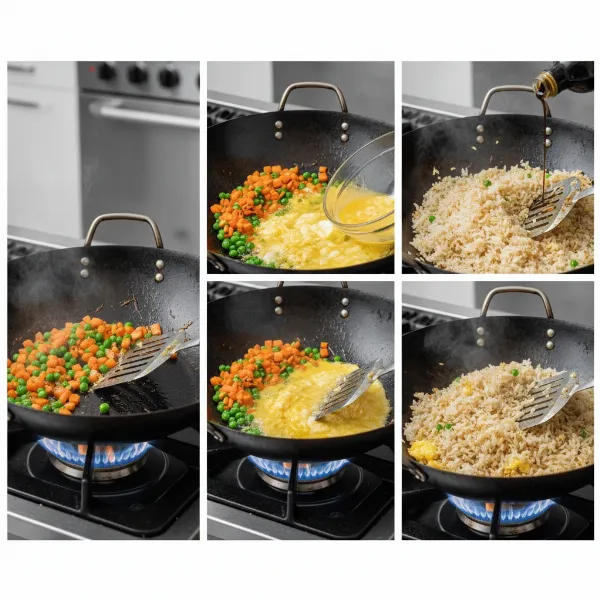 A multi-panel image or sequential photos showing the process of making fried rice: sautéing vegetables, adding eggs, then frying the rice in a wok with a spatula.
Troubleshooting Common Fried Rice Challenges
Even seasoned home cooks encounter challenges when making fried rice. Understanding these common pitfalls and how to address them can elevate your cooking and ensure consistently delicious results.
Preventing Soggy Fried Rice
The most frequent complaint about homemade fried rice is its soggy texture. This is almost always due to excess moisture. The primary culprit is often using freshly cooked, wet rice. Always opt for day-old, refrigerated rice, or use one of the quick-drying methods mentioned earlier. Another common mistake is overcrowding the pan, which lowers the temperature and causes ingredients to steam rather than fry. Cook in batches if necessary, allowing each portion enough space to crisp up. Too much sauce can also introduce excess liquid, so add sauces sparingly and in stages.
Achieving Crispy Grains
That delightful crispiness in restaurant fried rice comes from high heat and sufficient drying of the rice. If your grains aren’t getting crispy, double-check your rice preparation—is it truly dry? Ensure your pan is screaming hot before adding the rice, and don’t be afraid to use a moderate amount of oil to help conduct that heat. Employ the “fold-and-press” technique diligently, allowing the rice to make sustained contact with the hot surface to develop those coveted browned bits. A properly heated wok or skillet ensures that each grain has the opportunity to caramelize and develop its unique texture.
Uneven Flavor Distribution
Sometimes, homemade fried rice can have bland spots or areas where flavor is concentrated. This often happens from not thoroughly breaking up rice clumps or inadequate stirring. Ensure your day-old rice is fully separated before it hits the pan. When adding sauces, drizzle them evenly over the rice and stir vigorously to coat every grain. The “fold-and-press” method also aids in distributing flavors by constantly moving and exposing rice to the seasoned oil. Proper seasoning balance, including salt, soy sauce, and a touch of sugar, is key for a well-rounded taste.
“The secret to consistently great fried rice lies in two things: dry rice and high heat. Without these, you’re just steaming, not frying.” – Lan, Admin, ricecookerhot.com
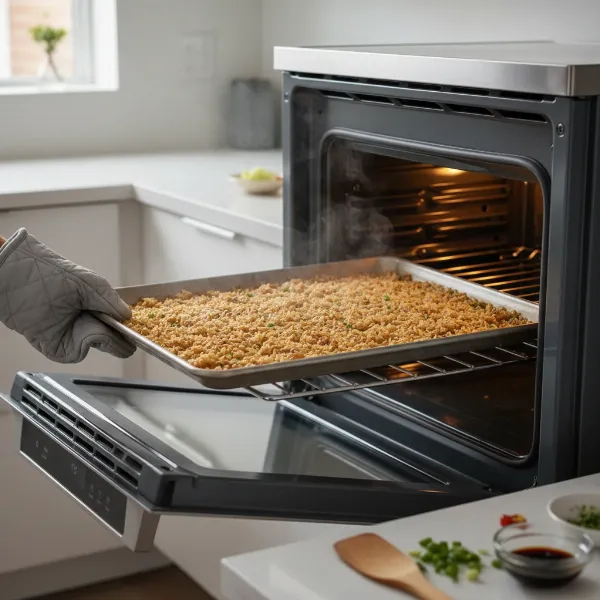 A baking sheet with fried rice spread out, going into a low-temperature oven to fix sogginess, illustrating a troubleshooting tip.
Beyond the Basics: Customizing Your Fried Rice
Once you’ve mastered the fundamentals, the world of fried rice customization opens up. This versatile dish can be adapted to suit any palate, dietary preference, or ingredients you have on hand. Don’t be afraid to experiment and make it your own!
Regional variations offer a fantastic starting point. For example, Cantonese-style fried rice often features char siu (BBQ pork), shrimp, and a lighter seasoning, while Yangzhou fried rice is known for its medley of ingredients including chicken, ham, and various vegetables. Thai fried rice (Khao Pad) often incorporates fish sauce, lime, and cilantro for a distinct tangy and fresh profile. These variations demonstrate the endless possibilities beyond a basic recipe.
Adjusting spice levels is another easy way to personalize your dish. Add a pinch of red pepper flakes, a dash of sriracha, or finely chopped fresh chilies like jalapeños or bird’s eye chilies along with your aromatics for an extra kick. For a milder version, simply omit the spicy elements. Exploring different oils, such as chili oil or garlic oil, can also infuse new dimensions of flavor. Consider healthy alternatives by loading up on extra vegetables or opting for brown rice as your base. You can also experiment with different types of protein, like smoked salmon, turkey bacon, or even black beans for a unique twist.
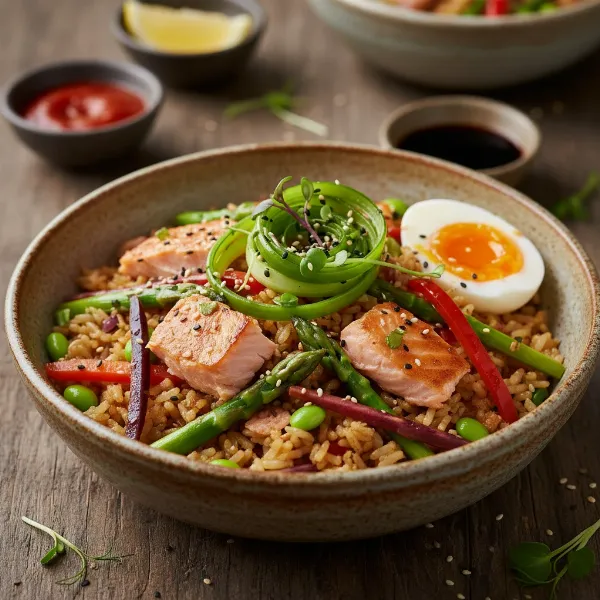 A beautifully styled bowl of customized fried rice, perhaps with an unusual protein or vegetable combination, showing creative possibilities.
Storing and Reheating Your Homemade Fried Rice
While fried rice is best enjoyed fresh off the wok, sometimes leftovers are inevitable. Knowing how to properly store and reheat your homemade fried rice is crucial for maintaining its quality and ensuring food safety.
For short-term storage, transfer any cooled leftover fried rice into an airtight container and refrigerate it promptly. It can safely be stored in the refrigerator for up to three to four days. While freezing is an option for longer storage (up to two months), be aware that the rice’s texture may become slightly softer or chewier upon thawing. If you choose to freeze it, portion it into individual servings in freezer-safe containers for convenience.
When reheating, a skillet or wok over medium-high heat with a splash of oil is generally the best method to revive its texture. Spread the rice evenly and stir-fry until heated through and some crispy bits reappear, typically 5-7 minutes. This method helps evaporate any accumulated moisture and restore some of the original crispness. Reheating in the microwave is quicker, but it often results in a softer texture and may not bring back the desired crispiness. If using a microwave, reheat in short intervals, stirring frequently, to ensure even heating and prevent drying out.
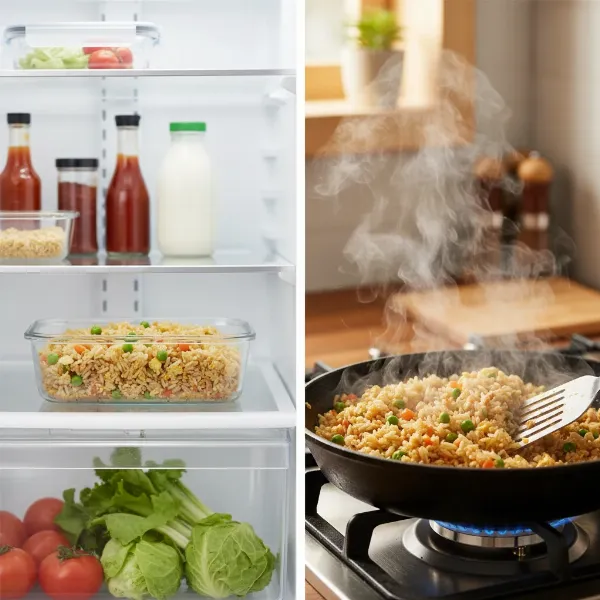 An airtight container of leftover fried rice in a refrigerator, and a skillet reheating fried rice, illustrating proper storage and reheating methods.
Conclusion
Creating restaurant-quality fried rice at home is a rewarding culinary endeavor that hinges on a few simple, yet crucial, principles. The true magic lies in harnessing the power of leftover rice cooker rice, allowing its reduced moisture to transform into perfectly separated, flavorful grains. By mastering proper rice preparation, embracing high-heat cooking techniques, and understanding how to layer your ingredients effectively, you can consistently achieve that coveted crispy texture and rich, savory taste.
As an experienced admin of ricecookerhot.com, I encourage you to experiment with various proteins, vegetables, and seasonings to tailor this versatile dish to your unique preferences. With these insights, your fried rice will not only be a testament to efficient leftover usage but also a delicious and satisfying meal for your family and friends. What unique ingredient will you add to your next batch of homemade fried rice?
Frequently Asked Questions
Can I use freshly cooked rice for fried rice?
While day-old rice is ideal due to its lower moisture content, you can use freshly cooked rice. To do so, spread it thinly on a baking sheet and refrigerate it for at least 30 minutes, or freeze for 20 minutes, to help dry it out and achieve a better texture for frying.
How long should rice sit out to become day-old for fried rice?
For optimal results, cooked rice should be refrigerated, uncovered, overnight. This allows excess moisture to evaporate, ensuring the grains are dry and firm, which is crucial for preventing stickiness and achieving a crispy texture when fried.
What is the best way to store leftover rice for fried rice?
To store leftover rice effectively for fried rice, spread it out on a baking sheet while still warm, then refrigerate it uncovered. This method promotes rapid cooling and moisture evaporation, ensuring the rice dries out adequately for frying without clumping.
Does the type of rice matter when making fried rice?
Yes, the type of rice matters. Medium or long-grain white rice varieties like Jasmine or Basmati are best as they hold their shape well and remain relatively firm. Sticky rice varieties are less suitable, as they can become mushy during the frying process.
How can I prevent soggy fried rice?
Prevent soggy fried rice by always using cold, dry day-old rice, avoiding overcrowding your pan, and cooking over high heat. Excess moisture from fresh rice or too many ingredients in the pan will cause the rice to steam rather than fry, resulting in a mushy texture.