Do you crave the vibrant flavors of Korean Bibimbap but shy away from the multiple pots and pans often required? Imagine creating this delightful dish with minimal fuss, transforming your humble rice cooker into a versatile culinary assistant. This article will guide you through crafting a delicious Bibimbap, a Korean mixed rice bowl, right in your rice cooker, simplifying the process without compromising on taste. We’ll cover everything from essential ingredients to step-by-step instructions, ensuring a satisfying meal that’s as easy to make as it is to enjoy.
What is Bibimbap? A Quick Introduction to the Korean Delight
Bibimbap, meaning “mixed rice,” is a beloved Korean dish renowned for its colorful presentation and harmonious blend of textures and flavors. Traditionally, it features a warm bowl of rice topped with an array of sautéed and seasoned vegetables (namul), marinated meat (often beef), a fried egg, and a dollop of spicy gochujang (Korean chili paste). The beauty of Bibimbap lies in mixing all these components together just before eating, creating a symphony of tastes in every spoonful. It’s a wholesome meal, rich in nutrients and endlessly customizable, making it a favorite for both everyday dining and special occasions.
Why Your Rice Cooker is Perfect for Bibimbap
For many, the thought of preparing Bibimbap conjures images of numerous bowls and skillets, each for a different vegetable or protein. This is where your rice cooker shines as an unexpected hero. Far beyond its primary role of cooking perfect rice, a modern rice cooker can handle much of the cooking process for your Bibimbap, consolidating tasks into one pot. This not only significantly reduces cleanup time but also makes the entire process more hands-off, allowing you to focus on other preparations or simply relax. It’s an ideal method for busy weeknights or for anyone looking to enjoy authentic Korean flavors with ultimate convenience.
Essential Ingredients for Your Rice Cooker Bibimbap
Crafting a delicious rice cooker Bibimbap starts with selecting the right ingredients. While flexible, certain components are key to achieving that authentic taste and texture.
The Foundation: Rice and Water
|
Our Picks for the Best Rice Cooker in 2026
As an Amazon Associate I earn from qualifying purchases.
|
||
| Num | Product | Action |
|---|---|---|
| 1 | Instant Pot 4QT RIO Mini 7-in-1 Multi-Cooker, Pressure Cooker, Slow cook, Sauté, Steam, Rice Maker, Yogurt, & Warmer, Sea Salt, 4 Quarts |

|
| 2 | Zojirushi Micom 3-Cup Compact Size, Multiple Settings, Stainless Steel Made, Built-In Retractable Power Cord and Easy to Transport Rice Cooker and Warmer |
|
| 3 | AROMA® Mini Rice Cooker, 2-Cup (Uncooked) / 4-Cup (Cooked), Grain Cooker, Soup Maker, Oatmeal Cooker, Auto Keep Warm, 1 Qt, Milk Tea color |
|
| 4 | AROMA® Select Stainless® Rice Cooker, 3-Cup (Uncooked) / 6-Cup (Cooked), Stainless Steel Inner Pot, Small Rice Cooker, Auto Keep Warm, 1.2 Qt, White, ARC-753SG |
|
| 5 | Aroma Housewares 4-Cups (Cooked) / 1Qt. Rice & Grain Cooker (ARC-302NGBL), Blue |
|
| 6 | COMFEE' Compact Rice Cooker, 6-in-1 Stainless Steel Multi Cooker, Slow Cooker, Steamer, Saute, and Warmer, 2 QT, 8 Cups Cooked(4 Cups Uncooked), Brown Rice, Quinoa and Oatmeal, 6 One-Touch Programs |
|
| 7 | BLACK+DECKER Rice Cooker 6-Cup (Cooked) with Steaming Basket, Removable Non-Stick Bowl, White |
|
| 8 | COSORI Rice Cooker 10 Cup, 24h Keep Warm, Non-stick Ceramic Inner Pot, 18 Functions Fuzzy Logic Rice Maker with Stainless Steel Steamer Basket, Sauté, Slow Cooker, Black |
|
| 9 | AROMA Digital Rice Cooker, 4-Cup (Uncooked) / 8-Cup (Cooked), Steamer, Grain Cooker, Multicooker, 2 Qt, Stainless Steel Exterior, ARC-914SBD |
|
| 10 | AROMA® Mini Rice Cooker, 2-Cup (Uncooked) / 4-Cup (Cooked), Grain Cooker, Soup Maker, Oatmeal Cooker, Auto Keep Warm, 1 Qt, Light Green |
|
The heart of any Bibimbap is the rice itself. Short-grain white rice is traditionally preferred for its slightly sticky texture, which holds the other ingredients together beautifully. Rinse your rice thoroughly under cold water until the water runs clear; this removes excess starch and ensures a fluffier result. For water, follow your rice cooker’s standard ratio, or a 1:1 ratio by volume for most white rice varieties. However, be mindful that added vegetables and meat will release moisture, so some experts suggest slightly less water, such as 3/4 cup of water for every 1 cup of rice, to prevent it from becoming too soggy.
Hearty Additions: Protein Choices
While beef is a classic choice, Bibimbap is versatile. Ground beef or thinly sliced sirloin are excellent options, marinated for depth of flavor. A simple marinade typically includes soy sauce, sesame oil, minced garlic, a touch of sugar or honey, and black pepper. If you prefer, diced chicken, tofu, or even shrimp can be fantastic alternatives. For tofu, ensure it’s firm or extra-firm and consider pressing it to remove excess water before marinating.
Vibrant Veggies for Color and Nutrition
A visually appealing Bibimbap is full of color, thanks to a medley of vegetables. Common choices include:
- Carrots: Julienne-cut for thin, quick-cooking strips.
- Shiitake Mushrooms: Sliced for an earthy umami flavor.
- Bean Sprouts: Adds a lovely crunch and freshness.
- Zucchini: Thinly sliced or diced for tenderness.
- Spinach: Fresh baby spinach adds a pop of green and wilts perfectly with residual heat.
These vegetables not only contribute to the dish’s nutritional value but also its diverse textures.
The Soul of Bibimbap: The Gochujang Sauce
No Bibimbap is complete without its signature spicy-sweet sauce. While you can find ready-made gochujang, a homemade sauce elevates the flavor. A basic sauce combines:
- Gochujang (Korean chili paste)
- Sesame oil
- Minced garlic
- Honey or sugar
- Soy sauce
- A splash of water or rice vinegar to adjust consistency
Mix these ingredients in a small bowl while your rice and other components are cooking, and adjust to your preferred level of sweetness and spice.
Step-by-Step Guide: Crafting Your Bibimbap in the Rice Cooker
Making Bibimbap in a rice cooker is simpler than you might imagine. Follow these steps for a wholesome and delicious meal.
Preparing Your Components
Before you begin cooking, a little prep work goes a long way:
- Rinse the Rice: Measure your short-grain rice and rinse it thoroughly under cold running water until the water is clear. Drain well.
- Marinate the Protein: If using beef or chicken, slice it thinly or use ground meat. In a bowl, combine your chosen protein with soy sauce, sesame oil, minced garlic, a touch of honey or sugar, and black pepper. Mix well and let it marinate for at least 15-20 minutes while you prep the vegetables.
- Prepare Vegetables: Julienne the carrots, slice the mushrooms and zucchini. Keep delicate greens like spinach separate for later.
Layering in the Rice Cooker
The layering is crucial for even cooking and to ensure flavors meld perfectly.
- Add the rinsed and drained rice to the inner pot of your rice cooker. Pour in the appropriate amount of water.
- Carefully layer the marinated protein on top of the rice, spreading it evenly but do not stir.
- Arrange the harder vegetables like julienned carrots, sliced mushrooms, and diced zucchini over the protein layer. Again, avoid stirring. This method allows the rice cooker to steam everything together, infusing the rice with the flavors of the meat and vegetables.
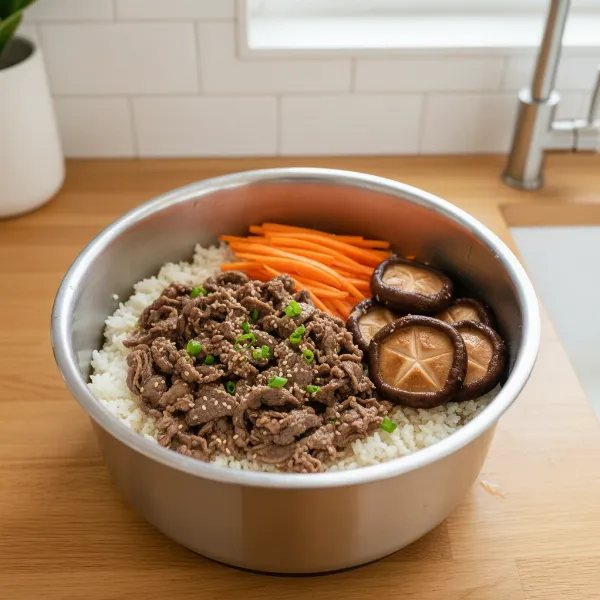 Ingredients layered in a rice cooker for Bibimbap preparation
The Cooking Cycle
With all your ingredients layered, it’s time to let your rice cooker work its magic:
- Close the lid of your rice cooker securely.
- Select the “White Rice” or “Plain” cooking setting. If your rice cooker has a specific “Mixed Rice” or “Congee” setting, you might experiment with those, but the standard rice setting usually works perfectly.
- Start the cooking cycle. While the rice is cooking, prepare your Bibimbap sauce and any optional toppings like a fried egg.
Finishing Touches and Serving
Once the rice cooker signals that cooking is complete, the final steps bring the dish to life:
- Add Delicate Greens: Carefully open the lid. Add the fresh spinach or other quick-cooking greens on top of the cooked ingredients. Close the lid again and let it steam for about 5 minutes using the residual heat. This will perfectly wilt the spinach without overcooking it.
- Optional Egg: While the spinach is steaming, quickly fry an egg to your liking (sunny-side up is traditional) for each serving.
- Mix and Serve: Open the lid. Drizzle the cooked Bibimbap with a teaspoon of sesame oil and sprinkle with toasted sesame seeds. Now, the fun part! Using a large spoon or rice paddle, gently mix all the ingredients in the rice cooker pot, ensuring the rice, meat, and vegetables are well combined.
- Serve immediately in individual bowls, topped with a fried egg and a generous dollop of your prepared gochujang sauce. Enjoy the explosion of flavors!
Expert Tips for the Best Rice Cooker Bibimbap
Achieving Bibimbap perfection in your rice cooker is an art that benefits from a few insider tips, ensuring your dish is both delicious and flawlessly cooked.
“The key to any successful rice cooker meal, especially one as diverse as Bibimbap, lies in understanding how your specific appliance handles moisture. Always adjust your water slightly down when adding substantial vegetables or protein, as they naturally release liquids during the cooking process. This prevents a soggy outcome and promotes that perfect, fluffy rice texture.” – Lan Nguyen, Senior Rice Cooker Analyst
- Adjusting Water for Moisture-Rich Ingredients: Since vegetables and marinated meat release moisture, consider slightly reducing the water you add with the rice. A common recommendation is to use 1/4 cup less water than you normally would for the same amount of rice, especially if you’re adding a lot of fresh vegetables.
- Timing for Delicate Greens: As noted in the steps, adding delicate leafy greens like spinach or quick-cooking herbs like chives after the main cooking cycle is essential. Allowing them to steam for 5 minutes with the lid closed preserves their vibrant color and tender texture, preventing them from becoming overcooked and mushy.
- Achieving a Crispy Rice Bottom (Dolsot Bibimbap Style): For those who love the crispy rice crust (nurungji) found in traditional stone pot (dolsot) Bibimbap, you can partially replicate this in some rice cookers. After the cooking cycle finishes, leave the Bibimbap on the “Keep Warm” setting for an additional 10-15 minutes without opening the lid. The direct heat from the bottom of the pot can create a delicious, slightly crispy layer of rice. Monitor closely to avoid burning.
- Customization is Key: Don’t be afraid to experiment with your favorite vegetables or proteins. Tofu, shrimp, or even leftover roasted chicken can make excellent additions. Adjust the gochujang sauce to your spice preference, adding more honey for sweetness or a pinch of chili flakes for extra heat. Consider adding kimchi directly to the bowl when serving for an added tangy crunch.
Frequently Asked Questions About Rice Cooker Bibimbap
Can I use brown rice or other grains for Rice Cooker Bibimbap?
Absolutely! While short-grain white rice is traditional, you can certainly use brown rice, quinoa, or a multi-grain blend. Remember to adjust the water ratio and cooking time according to the specific instructions for your chosen grain in your rice cooker, as they generally require more water and a longer cooking cycle. You may also need to pre-soak brown rice for a better texture.
How can I make Rice Cooker Bibimbap vegetarian or vegan?
Making your rice cooker Bibimbap vegetarian or vegan is simple. Substitute the meat with firm or extra-firm tofu (marinated and crumbled or diced), tempeh, or even a generous portion of mushrooms. Ensure your gochujang is vegan (most are, but check labels for honey or animal products). Omit the egg or use a vegan egg substitute. Increase the quantity and variety of vegetables to ensure a hearty and satisfying meal.
What kind of rice cooker is best for making Bibimbap?
Any standard electric rice cooker with a “White Rice” or “Plain” setting will work well for making Bibimbap. Multi-functional rice cookers with “Mixed Rice” or “Congee” settings might offer slightly more optimized results, but they are not essential. The key is to have a reliable rice cooker that consistently cooks rice evenly. Induction heating (IH) rice cookers can offer more precise temperature control for better results, but a basic model is perfectly capable.
Conclusion
Creating delectable Bibimbap in your rice cooker is a game-changer for anyone seeking a flavorful, wholesome, and incredibly convenient meal. This one-pot wonder simplifies the preparation of a beloved Korean classic, proving that you don’t need an arsenal of kitchenware to enjoy authentic international cuisine. By layering your ingredients thoughtfully and allowing your rice cooker to do the heavy lifting, you can effortlessly bring the vibrant tastes of Korea to your dining table. So, are you ready to transform your weekly meal routine and discover the joy of rice cooker Bibimbap?