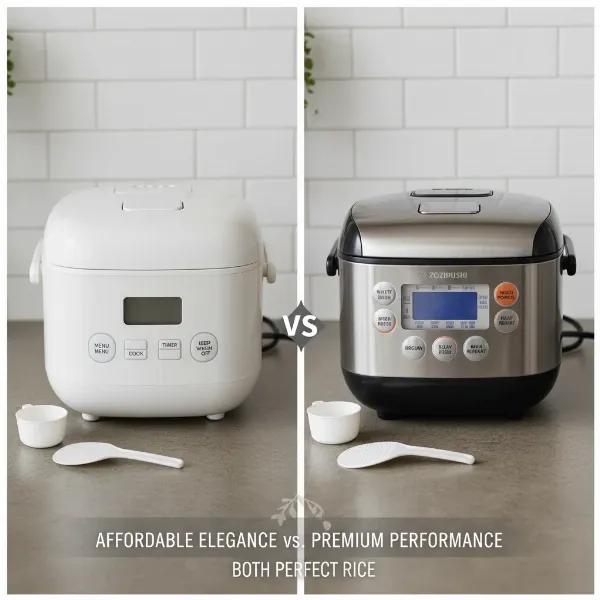
In the fast-paced world of restaurant kitchens, consistency and efficiency are paramount. Imagine a dinner rush where every dish needs perfectly cooked rice, yet your staff is tied up monitoring a stovetop pot. This scenario highlights why a commercial rice cooker isn’t just a convenience, but a critical investment for any foodservice establishment. This comprehensive guide will navigate you through the essential factors, innovative features, and top brands to help you select the ideal commercial rice cooker that elevates your culinary operations and ensures perfectly fluffy grains every time.
Overview of Commercial Rice Cookers
A commercial rice cooker is a specialized appliance designed to handle the rigorous demands of a professional kitchen, transforming what can be a labor-intensive task into a seamless, automated process. Unlike their smaller home counterparts, these commercial-grade units boast significantly higher capacities, robust construction, and advanced features built for continuous, high-volume operation. They are true workhorses, capable of producing large quantities of consistently cooked rice, freeing up valuable burner space and allowing your kitchen staff to focus on other culinary creations. From bustling Asian restaurants to cafeterias serving hundreds, a reliable commercial rice cooker delivers flawless results without constant supervision.
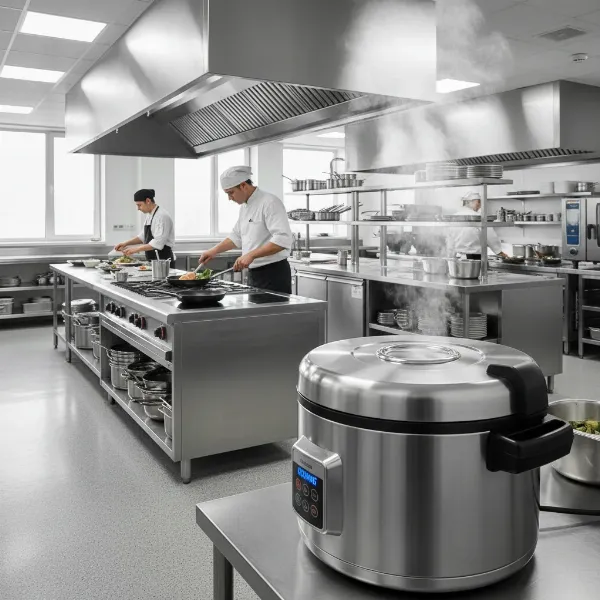 Large commercial rice cooker working efficiently in a busy restaurant kitchen, producing perfectly cooked rice.
Commercial rice cookers primarily come in electric models, which are the most common due to their plug-and-play convenience and precise temperature control. Gas-powered models are also available, though less common, often chosen by kitchens with limited electrical capacity. Beyond cooking, dedicated rice warmers are crucial for high-volume operations or buffets, designed to hold cooked rice at the perfect serving temperature for hours without drying it out or compromising texture. This ensures that every serving, from the first to the last, meets your restaurant’s quality standards.
How to Choose the Right Commercial Rice Cooker
Selecting the perfect commercial rice cooker involves careful consideration of your restaurant’s unique needs and operational flow. It’s about finding a durable, efficient, and versatile machine that seamlessly integrates into your kitchen, guaranteeing consistent, high-quality rice batch after batch.
Assess Your Restaurant’s Needs
|
Our Picks for the Best Rice Cooker in 2026
As an Amazon Associate I earn from qualifying purchases.
|
||
| Num | Product | Action |
|---|---|---|
| 1 | AROMA® Mini Rice Cooker, 2-Cup (Uncooked) / 4-Cup (Cooked), Grain Cooker, Soup Maker, Oatmeal Cooker, Auto Keep Warm, 1 Qt, Light Green |

|
| 2 | AROMA Digital Rice Cooker, 4-Cup (Uncooked) / 8-Cup (Cooked), Steamer, Grain Cooker, Multicooker, 2 Qt, Stainless Steel Exterior, ARC-914SBD |
|
| 3 | AROMA® Mini Rice Cooker, 2-Cup (Uncooked) / 4-Cup (Cooked), Grain Cooker, Soup Maker, Oatmeal Cooker, Auto Keep Warm, 1 Qt, Milk Tea color |
|
| 4 | Aroma Housewares 4-Cups (Cooked) / 1Qt. Rice & Grain Cooker (ARC-302NGBL), Blue |
|
| 5 | BLACK+DECKER Rice Cooker 6-Cup (Cooked) with Steaming Basket, Removable Non-Stick Bowl, White |
|
| 6 | COSORI Rice Cooker 10 Cup, 24h Keep Warm, Non-stick Ceramic Inner Pot, 18 Functions Fuzzy Logic Rice Maker with Stainless Steel Steamer Basket, Sauté, Slow Cooker, Black |
|
| 7 | Instant Pot 4QT RIO Mini 7-in-1 Multi-Cooker, Pressure Cooker, Slow cook, Sauté, Steam, Rice Maker, Yogurt, & Warmer, Sea Salt, 4 Quarts |
|
| 8 | Zojirushi Micom 3-Cup Compact Size, Multiple Settings, Stainless Steel Made, Built-In Retractable Power Cord and Easy to Transport Rice Cooker and Warmer |
|
| 9 | COMFEE' Compact Rice Cooker, 6-in-1 Stainless Steel Multi Cooker, Slow Cooker, Steamer, Saute, and Warmer, 2 QT, 8 Cups Cooked(4 Cups Uncooked), Brown Rice, Quinoa and Oatmeal, 6 One-Touch Programs |
|
| 10 | AROMA® Select Stainless® Rice Cooker, 3-Cup (Uncooked) / 6-Cup (Cooked), Stainless Steel Inner Pot, Small Rice Cooker, Auto Keep Warm, 1.2 Qt, White, ARC-753SG |
|
The first step is to accurately determine your daily and peak rice requirements. Don’t guess; track your usage during your busiest shifts. Commercial rice cooker capacity is typically measured in uncooked cups, with rice tripling in volume once cooked (e.g., a 30-cup uncooked capacity yields approximately 60 cups of cooked rice). For a restaurant serving 100 rice portions per hour (at about 3/4 cup each), you would need at least a 40-cup uncooked capacity cooker, assuming one batch per hour. Overestimating can lead to unnecessary expense, while underestimating will leave your staff scrambling during peak hours. Your menu also dictates the cooker type; a versatile model with multiple settings is crucial if you serve various grains like sushi, brown, or jasmine rice.
Types of Commercial Rice Cookers and Their Benefits
Commercial kitchens primarily use two main types:
- Electric Rice Cookers: These are the most prevalent, offering straightforward operation and precise heat control. They are ideal for most kitchen environments, providing consistent results for various rice types.
- Gas-Powered Rice Cookers: Less common, these units are suitable for kitchens with high demand or limited electrical circuits. They often offer faster cooking times and can be more cost-effective for prolonged, high-volume use in some settings.
- Dedicated Rice Warmers: Essential for high-volume operations, these units are designed only for holding cooked rice at serving temperature without further cooking. They prevent drying out and ensure consistency over extended periods.
Inner Pot Material and Construction
The quality of the inner pot significantly impacts cooking performance and durability. Look for features like:
- Non-stick coating: Prevents rice from sticking, making cleaning easier and reducing waste.
- Durable materials: Stainless steel or thick aluminum alloys are common, with spherical or rounded inner pots often providing optimal heat distribution. Thicker pots generally indicate superior insulation and more even cooking.
- Lid construction: A 304 stainless steel lid is preferred for its heat resistance, corrosion protection, and contribution to even heat distribution, preventing condensation from dripping back onto the rice.
Capacity Considerations
Choosing the correct capacity is vital to avoid multiple batches during a rush or excessive waste. Commercial rice cookers range widely:
- Small capacity (under 1 liter uncooked, ~20 cups cooked): Suitable for small cafes or food trucks.
- Medium capacity (1-1.8 liters uncooked, ~20-35 cups cooked): Good for mid-sized restaurants.
- Large capacity (over 1.8 liters uncooked, 35-90+ cups cooked): Essential for high-volume establishments, catering services, or institutional cafeterias.
Always remember that uncooked rice approximately doubles or triples in volume once cooked.
Essential and Advanced Features
Modern commercial rice cookers come equipped with features designed to enhance efficiency and consistency:
- “Keep Warm” Function: A non-negotiable feature that automatically holds rice at a perfect serving temperature for hours without burning or drying it out.
- “Fuzzy Logic” Technology: These smart microchips use sensors to monitor temperature and moisture, making real-time adjustments to ensure perfectly cooked rice regardless of grain type or minor water measurement errors. This removes guesswork and guarantees consistency.
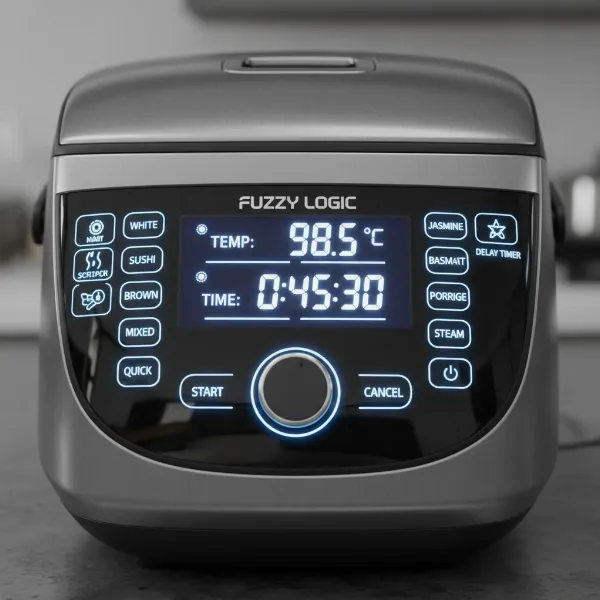 Close-up of a commercial rice cooker's digital control panel with fuzzy logic technology enabled.
 - Digital Controls: Offer precise settings for different rice varieties and cooking modes, often with programmable timers.
- Heated Lids: Prevent condensation from dripping, ensuring even heat distribution from all sides and maintaining consistent texture.
- Multi-functional settings: Many models can cook various grains like quinoa, oatmeal, or even steam vegetables, offering versatility.
- NSF Certification: This crucial certification ensures the appliance meets public health and safety standards, is made of food-safe materials, and is easy to clean.
Top Commercial Rice Cooker Brands
Several brands have earned reputations for reliability and performance in commercial kitchens:
- Zojirushi: Often considered the “gold standard,” known for precision, durability, advanced induction heating, and consistent results, favored by sushi restaurants and fine-dining establishments. The Zojirushi NYC-36 is a frequently recommended heavy-duty model.
- Panasonic: Valued for robust construction, efficiency, and advanced thermostat regulation, ensuring even cooking for high-demand kitchens.
- Aroma Housewares: Offers reliable and affordable options with large capacities, ideal for busy restaurants and cafeterias prioritizing quantity and efficiency. The Aroma ARC-1024E is a budget-friendly choice for smaller businesses.
- Hamilton Beach Commercial: A trusted name offering versatile models capable of cooking various grains, with user-friendly controls and durable non-stick inner pots. The Hamilton Beach 37590 can prepare up to 90 cups of cooked rice.
- Cuckoo: Renowned for premium materials and cutting-edge cooking technology, ensuring flawless results and excellent rice-holding capabilities.
- Town (RiceMaster): Engineered for heavy-duty, high-volume performance, with models cooking up to 55 cups of raw rice, suitable for large operations.
Comparison Table: Electric vs. Gas vs. Advanced Commercial Rice Cookers
| Feature | Electric Rice Cookers | Gas-Powered Rice Cookers | Advanced (Fuzzy Logic/Induction) Electric Cookers |
|---|---|---|---|
| Price Range | Moderate to High | Moderate to High | High |
| Capacity | Widest range, from small to very large | Large, often for very high-volume | Mid to Large |
| Features | Auto keep-warm, some programmable settings | Basic cook/warm, more manual control | “Fuzzy logic,” induction heating, multiple grain settings, precise temp control, heated lids |
| Durability | Good, especially stainless steel models | Excellent, heavy-duty construction | Excellent, often premium materials |
| Quality of Rice | Consistent, good for most standard rice | Consistent, efficient for large batches | Superior consistency, ideal for specialty grains and delicate textures |
| Power Source | Electricity (requires dedicated circuit for large units) | Natural gas or liquid propane | Electricity (requires dedicated circuit) |
| Ease of Use/Cleanup | Generally easy, non-stick pots are common | Can be more manual, but robust | Very user-friendly, automated, easy to clean |
| Best For | Most restaurants, versatile menus | Very high-volume, kitchens with gas infrastructure | Sushi bars, fine dining, diverse menus demanding precision and consistency |
Where to Purchase Commercial Rice Cookers
When you’re ready to invest, reliable sources are key. Reputable restaurant supply stores, both online and physical, offer a wide selection of commercial rice cookers. Brands like Webstaurant Store and RestaurantSupply.com are excellent starting points for comparing models and prices.
When purchasing, always prioritize models with NSF Listing for health and safety compliance. Also, carefully review the warranty and available customer support. A solid warranty protects your investment against operational issues, which is crucial for heavy-use equipment. Exploring restaurant equipment financing options can also help manage the upfront cost of high-quality models, allowing you to acquire the best gear without a massive initial outlay.
Tips for Using and Maintaining Your Commercial Rice Cooker
Proper use and maintenance are crucial to maximizing the lifespan and performance of your commercial rice cooker, ensuring it remains a reliable workhorse in your kitchen.
Cleaning Your Rice Cooker Correctly
A simple daily cleaning routine prevents starch buildup and maintains hygiene standards:
- Unplug and Cool: Always unplug the unit and allow it to cool completely before cleaning.
- Remove Parts: Detach the inner pot, inner lid, and steam vent cap. Wash these with warm, soapy water and a soft sponge to protect non-stick surfaces.
- Wipe Down: Use a damp cloth to wipe the exterior and the inside of the main body, including the heating plate, removing any spills or condensation.
- Regular Checks: Weekly, inspect the power cord for damage and ensure the heating plate is free of debris to guarantee even heat distribution. Check rubber seals on the lid for wear.
Optimizing Your Water-to-Rice Ratio
Inconsistent rice is often due to an incorrect water-to-rice ratio. Different rice types (jasmine, basmati, brown) absorb water differently.
- Consult the Manual: Always start with the manufacturer’s guide for your specific model and rice type.
- Test Batches: Run small test batches to fine-tune the ratio for your kitchen’s unique conditions (humidity, altitude).
- Weigh, Don’t Measure: For ultimate consistency, measure rice and water by weight instead of volume. Document the successful ratios for your team.
Troubleshooting Common Rice Cooker Issues
Even the best equipment can encounter problems. Here are common issues and their fixes:
- Inconsistent Batches (crunchy/mushy): Primarily a water-to-rice ratio issue. Also, ensure the inner pot sits flush against the heating element and avoid overloading the machine, which prevents proper steam circulation.
- Burnt or Mushy Rice: Check water levels (too little leads to scorching), ensure the inner pot is making full contact with the heating element, and clean the heating plate regularly.
- Cooker Won’t Turn On: Verify it’s securely plugged into a working, dedicated outlet and check the power cord for damage.
- Overloading: If rice is undercooked on top and overcooked on the bottom, you might be exceeding the cooker’s maximum capacity. Consider a larger unit for your volume needs.
Conclusion
Choosing the best commercial rice cooker for your restaurant is a decision that significantly impacts kitchen efficiency, food quality, and customer satisfaction. By understanding your specific needs, evaluating capacity, durability, and essential features like a reliable keep-warm function and “fuzzy logic” technology, you can make an informed investment. Top brands like Zojirushi, Panasonic, and Aroma offer a range of solutions, each with distinct advantages. Remember to prioritize NSF certification, review warranties, and establish consistent cleaning and maintenance routines to ensure your rice cooker performs flawlessly for years to come. Investing wisely now means perfectly cooked rice for every guest, every time.
What specific rice varieties are central to your menu, and how might a multi-functional commercial rice cooker help you expand your offerings?
Frequently Asked Questions
What is the primary difference between a commercial and a home rice cooker?
Commercial rice cookers are designed for high-volume use, offering larger capacities (up to 90+ cooked cups), superior durability with robust materials like stainless steel, and advanced features such as “fuzzy logic” and extended keep-warm functions for consistent results over prolonged periods. Home models lack the construction and capacity for the continuous demands of a professional kitchen.
How do I accurately calculate the right capacity for my restaurant’s rice cooker?
To determine capacity, estimate your peak daily demand in cooked rice portions. A general rule is one cup of cooked rice per guest. Since raw rice roughly doubles or triples in volume, divide your total cooked rice need by two or three to find the required uncooked capacity. Always err on the side of slightly larger capacity to handle unexpected rushes efficiently.
Is a more expensive rice cooker with “fuzzy logic” technology truly worth the investment?
“Fuzzy logic” rice cookers use smart sensors to precisely adjust cooking temperature and time, ensuring perfect consistency with various grain types. If your restaurant serves specialty rice (like sushi or brown rice) or demands absolute perfection in every batch, the investment in a “fuzzy logic” model is worthwhile for its superior quality control and reduced staff oversight.
Can I use my commercial rice cooker to prepare other grains besides white rice?
Absolutely. Many modern commercial rice cookers are highly versatile and include settings for preparing various grains such as brown rice, quinoa, oatmeal, and grits. Some models also come with steaming baskets, allowing you to steam vegetables, fish, or other items, thereby freeing up valuable stovetop space during busy service hours.
How critical is the “keep-warm” function for a restaurant setting?
The “keep-warm” function is essential for commercial kitchens. It maintains cooked rice at a safe and ideal serving temperature for hours without drying out, burning, or compromising its texture. This feature significantly reduces food waste and ensures that your kitchen can consistently serve fresh, fluffy rice throughout peak service periods without needing to cook new batches.