Have you ever dreamt of savoring creamy, comforting polenta without the endless stirring? Traditional polenta often demands constant attention at the stovetop, a culinary commitment that can deter even the most enthusiastic home cooks. The good news is that your trusty rice cooker is about to become your secret weapon for effortless polenta, transforming a demanding dish into a simple, hands-off delight. This comprehensive guide will walk you through everything you need to know, from understanding polenta to a step-by-step cooking process, ensuring you achieve perfect, velvety results every time.
Understanding Polenta: A Culinary Overview
Polenta, a staple of Northern Italian cuisine, is a versatile dish made from coarsely ground cornmeal. When cooked with liquid, it transforms into a thick, creamy porridge, offering a comforting and hearty base for a myriad of meals. Historically, it was a peasant dish, but today it graces tables in both rustic and refined settings.
Often compared to grits, polenta typically uses yellow corn with a medium to coarse grind, while grits are usually made from white corn that’s ground finer, resulting in subtle differences in texture and flavor. Polenta’s mild, slightly sweet, corn-forward taste makes it a superb canvas for various seasonings and toppings. It can be served immediately as a soft, creamy accompaniment, or it can be cooled and solidified, then cut into shapes for grilling, baking, or frying, offering a delightful textural contrast.
Why Your Rice Cooker is Perfect for Polenta
The rice cooker method for making polenta is a game-changer, eliminating much of the effort typically associated with this classic dish. It offers several distinct advantages that make it an attractive option for busy individuals and those seeking culinary simplicity.
The “Set-It-and-Forget-It” Advantage
|
Our Picks for the Best Rice Cooker in 2026
As an Amazon Associate I earn from qualifying purchases.
|
||
| Num | Product | Action |
|---|---|---|
| 1 | AROMA Digital Rice Cooker, 4-Cup (Uncooked) / 8-Cup (Cooked), Steamer, Grain Cooker, Multicooker, 2 Qt, Stainless Steel Exterior, ARC-914SBD |

|
| 2 | AROMA® Select Stainless® Rice Cooker, 3-Cup (Uncooked) / 6-Cup (Cooked), Stainless Steel Inner Pot, Small Rice Cooker, Auto Keep Warm, 1.2 Qt, White, ARC-753SG |
|
| 3 | COSORI Rice Cooker 10 Cup, 24h Keep Warm, Non-stick Ceramic Inner Pot, 18 Functions Fuzzy Logic Rice Maker with Stainless Steel Steamer Basket, Sauté, Slow Cooker, Black |
|
| 4 | Zojirushi Micom 3-Cup Compact Size, Multiple Settings, Stainless Steel Made, Built-In Retractable Power Cord and Easy to Transport Rice Cooker and Warmer |
|
| 5 | COMFEE' Compact Rice Cooker, 6-in-1 Stainless Steel Multi Cooker, Slow Cooker, Steamer, Saute, and Warmer, 2 QT, 8 Cups Cooked(4 Cups Uncooked), Brown Rice, Quinoa and Oatmeal, 6 One-Touch Programs |
|
| 6 | AROMA® Mini Rice Cooker, 2-Cup (Uncooked) / 4-Cup (Cooked), Grain Cooker, Soup Maker, Oatmeal Cooker, Auto Keep Warm, 1 Qt, Light Green |
|
| 7 | Instant Pot 4QT RIO Mini 7-in-1 Multi-Cooker, Pressure Cooker, Slow cook, Sauté, Steam, Rice Maker, Yogurt, & Warmer, Sea Salt, 4 Quarts |
|
| 8 | AROMA® Mini Rice Cooker, 2-Cup (Uncooked) / 4-Cup (Cooked), Grain Cooker, Soup Maker, Oatmeal Cooker, Auto Keep Warm, 1 Qt, Milk Tea color |
|
| 9 | Aroma Housewares 4-Cups (Cooked) / 1Qt. Rice & Grain Cooker (ARC-302NGBL), Blue |
|
| 10 | BLACK+DECKER Rice Cooker 6-Cup (Cooked) with Steaming Basket, Removable Non-Stick Bowl, White |
|
The most compelling reason to use a rice cooker for polenta is its hands-off nature. Unlike the stovetop method, which requires continuous stirring to prevent lumps and sticking, a rice cooker allows you to combine ingredients, press a button, and walk away. This frees up your time to focus on other meal preparations or simply relax while your polenta cooks to perfection. It’s an ideal solution for preparing a gourmet side dish with minimal active involvement.
Consistent Texture Every Time
Achieving perfectly creamy polenta on the stovetop can be challenging, often resulting in lumps or a burnt bottom. Rice cookers, especially those with non-stick pots, excel at distributing heat evenly and maintaining a consistent temperature, significantly reducing these common issues. This controlled cooking environment ensures your polenta develops a smooth, velvety texture without clumping, providing reliable results you can count on.
Works with Any Rice Cooker
Whether you own a basic, single-function rice cooker or a more advanced multi-functional model, it can likely handle polenta. Simple rice cookers will typically use their standard “cook” cycle, while more sophisticated units might offer specific “porridge” or “slow cook” settings that are ideal for polenta’s gentle, longer cooking needs. This adaptability means you don’t need specialized equipment beyond what you might already have in your kitchen.
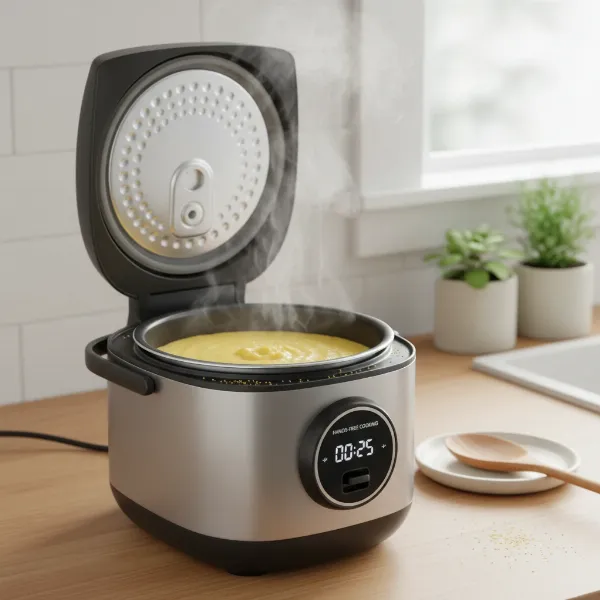 Creamy polenta cooking effortlessly in a modern rice cooker, highlighting convenience and consistent results.
Essential Ingredients for Rice Cooker Polenta
Crafting delicious polenta begins with selecting the right ingredients. While the core components are simple, understanding their role can elevate your dish from good to exceptional.
The Right Polenta
The type of cornmeal you choose significantly impacts the final texture of your polenta. For traditional, creamy polenta, opt for medium-ground or coarse-ground yellow cornmeal. Look for packages specifically labeled “polenta” or “corn grits.” Avoid fine cornmeal, as it can result in a gluey, pasty texture, and steer clear of instant polenta, which cooks too quickly and may not develop the deep flavor and texture of slower-cooked varieties. A coarser grind offers a more satisfying, rustic mouthfeel.
Liquid Bases
The liquid component is crucial for cooking and flavoring your polenta. The basic ratio is typically one part polenta to four parts liquid, though this can be adjusted for desired creaminess.
- Water: Simple and allows the natural corn flavor to shine. Use salted water for best results.
- Vegetable or Chicken Stock: Infuses the polenta with savory depth, adding a layer of flavor that water alone cannot provide. This is highly recommended for a richer dish.
- Milk: For an ultra-creamy and richer polenta, you can substitute some or all of the water/stock with milk or even a dairy-free alternative. This yields a more indulgent texture, perfect for special occasions.
Flavor Enhancers
While polenta is delicious on its own, a few additions can enhance its taste and creaminess.
- Salt: Essential for seasoning the polenta from within. Add it at the beginning of the cooking process.
- Butter: Stirring in a tablespoon or two of unsalted butter at the end adds richness and a silky texture.
- Parmesan Cheese: Freshly grated Parmesan Reggiano stirred in after cooking provides a savory, umami-rich finish. For a dairy-free option, nutritional yeast can mimic a cheesy flavor.
- Olive Oil: A drizzle of good quality olive oil can add a subtle fruitiness and smooth texture, especially if you’re making vegan polenta.
- Aromatics and Herbs: Consider adding a crushed garlic clove or a sprig of rosemary to the liquid during cooking for infused flavor. Dried chives or Italian seasoning can also be mixed in for an herbaceous touch.
Step-by-Step Guide: How to Make Polenta in a Rice Cooker
Making polenta in a rice cooker is remarkably straightforward, offering a hands-off approach to a traditionally labor-intensive dish. Follow these steps for perfect results.
Preparation: Gather and Mix
Begin by accurately measuring your ingredients. For a creamy polenta, a common starting point is a 1:4 ratio of polenta to liquid. For example, if you’re using 1 cup of polenta, you’ll need 4 cups of water, broth, or milk. Combine the measured polenta, liquid, and salt directly into your rice cooker’s inner pot. Give the mixture a quick but thorough whisk to ensure there are no dry pockets of cornmeal and that the salt is evenly distributed. This initial stir helps prevent lumps from forming during cooking.
Choosing Your Rice Cooker Setting
Once your ingredients are mixed, close the rice cooker lid securely. The cooking setting will depend on your specific rice cooker model:
- Multi-functional Rice Cookers: Many modern rice cookers feature dedicated settings like “porridge” or “slow cook.” These are often ideal for polenta as they provide a gentler, longer cooking cycle, mimicking the slow simmer needed for optimal texture.
- Basic Rice Cookers: If your rice cooker has only a “cook” or “white rice” setting, this will generally work well. Simply press the cook button to initiate the cycle. Some recipes recommend checking and stirring briefly after about 30 minutes, especially if your cooker tends to stick.
The Cooking Process
Allow the rice cooker to complete its cycle without interruption. Cooking times can vary significantly between models and chosen settings. A “porridge” setting might take up to 1.5 hours, while a standard “white rice” cycle could finish in 20-30 minutes. The key is that the process is largely hands-off. Once the cooker switches to “warm” or indicates the cycle is complete, the polenta should be fully hydrated and tender.
Post-Cooking Magic: Stir and Serve
After the cooking cycle finishes, let the polenta rest in the rice cooker with the lid on for about 5-10 minutes. This allows any remaining liquid to be fully absorbed and the polenta to settle. Then, open the lid and give the polenta a vigorous stir with a wooden spoon or whisk. This crucial step helps to break up any minor lumps that might have formed and incorporates any liquid that has separated, resulting in a beautifully smooth and creamy consistency. Now is the perfect time to stir in your preferred flavor enhancers, such as butter, Parmesan cheese, or a drizzle of olive oil, adjusting salt and pepper to taste.
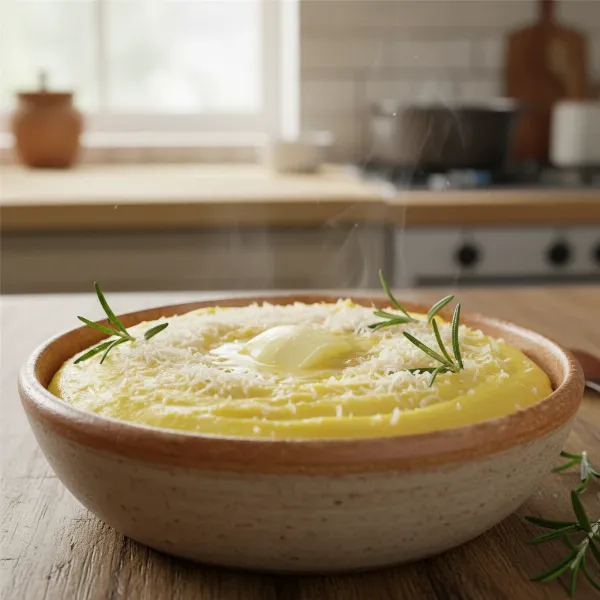 Bowl of hot, creamy polenta topped with melted butter, grated Parmesan cheese, and fresh herbs.
“The beauty of using a rice cooker for polenta lies in its hands-off convenience; it transforms a dish traditionally requiring constant attention into a simple, set-and-forget experience, making creamy polenta accessible to even the busiest home cooks.” – Lan, Admin of ricecookerhot.com
Achieving the Perfect Polenta Texture
While the rice cooker simplifies polenta preparation, a few tips can help you achieve your desired consistency and troubleshoot common issues.
Troubleshooting Common Issues
- Lumps: Lumps typically form if the cornmeal is added too quickly to the liquid without sufficient whisking at the start. To prevent this, ensure you whisk thoroughly when combining the ingredients. If lumps appear after cooking, a vigorous whisking with a sturdy spoon or whisk should smooth them out.
- Too Thick: If your polenta appears too thick or dry after cooking, simply add a splash of hot water, broth, or milk, one tablespoon at a time, and stir until it reaches your desired creamy consistency.
- Too Thin: If the polenta is too thin, close the lid and run another short cook cycle (e.g., 5-10 minutes), checking frequently, until it thickens to your liking. Keep in mind that polenta will continue to thicken as it cools.
- Sticking to the Bottom: Modern rice cookers often have non-stick pots, which greatly reduce sticking. However, if you experience some sticking, a brief stir occasionally during the cook cycle (if your cooker allows opening the lid) can help. Lining the pot with parchment paper is another option, though often unnecessary.
Adjusting for Desired Consistency
Polenta can be incredibly versatile, and its final texture can be tailored to your preference.
- Creamy Polenta: For a soft, pourable consistency, stick to the 1:4 polenta to liquid ratio, or even increase the liquid to 1:5 if you prefer it looser. Adding butter or milk at the end will enhance its richness and creaminess.
- Firm Polenta: If you plan to serve polenta in slices or shapes for grilling or frying, you might use a slightly lower liquid ratio (e.g., 1:3.5) or simply spread the cooked polenta onto a baking sheet or shallow dish and chill it overnight in the refrigerator. As it cools, it will firm up, allowing you to easily cut it into squares, rectangles, or rounds.
Creative Ways to Enjoy Your Rice Cooker Polenta
The beauty of polenta lies in its versatility. Once you’ve mastered the rice cooker method, a world of culinary possibilities opens up.
Savory Serving Suggestions
Creamy polenta is an excellent base for a wide array of savory toppings. Think of it as an Italian cousin to mashed potatoes, ready to soak up rich flavors.
- Hearty Stews and Braised Meats: Serve creamy polenta underneath slow-cooked beef ragu, lamb stew, or braised chicken. The polenta soaks up the savory juices beautifully.
- Roasted Vegetables: Top with seasonal roasted vegetables like mushrooms, asparagus, bell peppers, or zucchini for a lighter, vegetarian-friendly meal. A sprinkle of fresh herbs completes the dish.
- Eggs: For a comforting breakfast, brunch, or even “brinner,” spoon warm polenta into a bowl and top with a perfectly poached, fried, or soft-boiled egg. The runny yolk adds an extra layer of richness.
- Sautéed Delights: Pair with sautéed greens like spinach or kale, or with a medley of wild mushrooms cooked in garlic and butter.
From Creamy to Crispy: Pan-Frying Polenta
One of the most popular ways to enjoy firm polenta is by pan-frying it. This transforms the soft texture into a delightful crispy exterior with a tender interior.
How to Pan-Fry Polenta:
- Chill: Pour your freshly cooked polenta onto a baking sheet or into a shallow container, spreading it evenly to about 1 to 1.5 inches thick. Refrigerate overnight, or for at least 4 hours, until completely firm.
- Cut: Once firm, carefully invert the polenta onto a cutting board. Use a sharp knife or cookie cutters to cut it into your desired shapes (squares, rectangles, rounds).
- Fry: Heat a skillet over medium heat with a tablespoon of olive oil or butter. Place the polenta pieces in a single layer, ensuring not to overcrowd the pan. Cook for 3-4 minutes per side, or until golden brown and crispy.
- Serve: Enjoy pan-fried polenta with marinara sauce, a mushroom ragu, or alongside grilled meats.
Storage and Reheating Tips
Making a larger batch of polenta in your rice cooker for meal prep is a smart move. Proper storage ensures you can enjoy your delicious creation for days to come.
- Refrigeration: Store any leftover cooked polenta in an airtight container in the refrigerator for up to 5 days. Be aware that the polenta will firm up considerably as it cools, transforming into a sliceable block. This is perfectly normal and even desirable if you plan to pan-fry it later.
- Reheating Creamy Polenta: To restore its creamy consistency, transfer the desired portion to a saucepan. Add a splash of water, broth, or milk (about 1-2 tablespoons per cup of polenta) and heat gently over low to medium heat, stirring continuously, until smooth and warmed through. You can also reheat it in the microwave, stirring every minute or so, adding liquid as needed.
- Freezing: Polenta freezes well for longer storage. Allow it to cool completely, then transfer it to a freezer-safe container or bag. It can be frozen for up to 3 months. Thaw overnight in the refrigerator before reheating as described above.
Conclusion
Making polenta in a rice cooker is a brilliant, hands-off method that delivers consistently creamy and delicious results without the traditional constant stirring. From a rustic Italian staple to a versatile accompaniment for countless dishes, your rice cooker empowers you to enjoy this comforting cornmeal porridge with remarkable ease. By understanding the right ingredients, proper ratios, and simple cooking steps, you can confidently create perfect polenta every time. What delicious topping or savory main will you pair with your effortlessly made rice cooker polenta tonight?
Frequently Asked Questions
What is the best water to polenta ratio for a rice cooker?
The ideal ratio for creamy polenta in a rice cooker is typically 1 part polenta to 4 parts liquid (water, broth, or milk). For an even looser, more pourable consistency, you can increase the liquid slightly to a 1:5 ratio. Always whisk thoroughly at the beginning to prevent lumps and ensure proper hydration.
Do I need to stir polenta in a rice cooker?
One of the main benefits of using a rice cooker is the “no-stir” advantage. While a quick whisk when combining ingredients is crucial, constant stirring during cooking is not required. A final vigorous stir after the cooking cycle helps to incorporate any separated liquid and ensure a smooth, creamy texture.
What setting should I use on my rice cooker for polenta?
For best results, use your rice cooker’s “porridge” setting if available, as it offers a longer, gentler cook. If not, the standard “white rice” or basic “cook” cycle will also work effectively. Cooking times vary, but the rice cooker will typically switch to a “warm” setting when done.
Can I make vegan polenta in a rice cooker?
Absolutely! To make vegan polenta, simply use water or vegetable stock as your liquid base. Instead of dairy butter, opt for vegan butter or a good quality olive oil. For a cheesy flavor without dairy, nutritional yeast can be stirred in after cooking, providing a savory, umami note.
How long does polenta take to cook in a rice cooker?
Cooking time for polenta in a rice cooker varies depending on the model and selected setting. On a “porridge” setting, it can take up to 1.5 hours. A standard “white rice” cycle might be quicker, around 20-30 minutes. Always check the consistency at the end and run an additional short cycle if a firmer texture is desired.