Is your rice cooker no longer delivering perfectly fluffy rice? Perhaps you’ve noticed inconsistent cooking, a burnt bottom, or unusual odors emanating from your beloved kitchen appliance. More often than not, these frustrating issues stem from a surprisingly simple culprit: a dirty heating plate. Over time, spills, starch residue, and food particles can accumulate on this critical component, hindering its ability to evenly distribute heat and cook your rice to perfection. This guide will walk you through the essential steps and best practices to thoroughly clean your rice cooker’s heating plate, restoring its optimal function and ensuring every batch of rice is a culinary success.
Understanding Your Rice Cooker’s Heating Plate
The heating plate is the unassuming heart of your rice cooker, a flat metal disc located at the bottom of the main unit where the inner pot rests. Its primary job is to generate and transfer heat directly to the inner pot, initiating the cooking process. When this plate is clean and unobstructed, heat transfer is efficient and uniform, leading to consistently cooked rice.
The Role of the Heating Plate in Perfect Rice
|
Our Picks for the Best Rice Cooker in 2026
As an Amazon Associate I earn from qualifying purchases.
|
||
| Num | Product | Action |
|---|---|---|
| 1 | AROMA® Select Stainless® Rice Cooker, 3-Cup (Uncooked) / 6-Cup (Cooked), Stainless Steel Inner Pot, Small Rice Cooker, Auto Keep Warm, 1.2 Qt, White, ARC-753SG |

|
| 2 | COSORI Rice Cooker 10 Cup, 24h Keep Warm, Non-stick Ceramic Inner Pot, 18 Functions Fuzzy Logic Rice Maker with Stainless Steel Steamer Basket, Sauté, Slow Cooker, Black |
|
| 3 | Zojirushi Micom 3-Cup Compact Size, Multiple Settings, Stainless Steel Made, Built-In Retractable Power Cord and Easy to Transport Rice Cooker and Warmer |
|
| 4 | AROMA® Mini Rice Cooker, 2-Cup (Uncooked) / 4-Cup (Cooked), Grain Cooker, Soup Maker, Oatmeal Cooker, Auto Keep Warm, 1 Qt, Milk Tea color |
|
| 5 | Instant Pot 4QT RIO Mini 7-in-1 Multi-Cooker, Pressure Cooker, Slow cook, Sauté, Steam, Rice Maker, Yogurt, & Warmer, Sea Salt, 4 Quarts |
|
| 6 | BLACK+DECKER Rice Cooker 6-Cup (Cooked) with Steaming Basket, Removable Non-Stick Bowl, White |
|
| 7 | AROMA Digital Rice Cooker, 4-Cup (Uncooked) / 8-Cup (Cooked), Steamer, Grain Cooker, Multicooker, 2 Qt, Stainless Steel Exterior, ARC-914SBD |
|
| 8 | Aroma Housewares 4-Cups (Cooked) / 1Qt. Rice & Grain Cooker (ARC-302NGBL), Blue |
|
| 9 | AROMA® Mini Rice Cooker, 2-Cup (Uncooked) / 4-Cup (Cooked), Grain Cooker, Soup Maker, Oatmeal Cooker, Auto Keep Warm, 1 Qt, Light Green |
|
| 10 | COMFEE' Compact Rice Cooker, 6-in-1 Stainless Steel Multi Cooker, Slow Cooker, Steamer, Saute, and Warmer, 2 QT, 8 Cups Cooked(4 Cups Uncooked), Brown Rice, Quinoa and Oatmeal, 6 One-Touch Programs |
|
For perfect rice, even heat distribution is paramount. The heating plate utilizes direct contact to transfer thermal energy to the bottom of the inner pot, which then heats the water and rice. Any residue, whether burnt-on food or starchy buildup, acts as an insulator, creating hot spots and cold spots that disrupt this delicate balance. A clean heating plate ensures that every grain of rice receives the heat it needs to cook evenly and thoroughly.
Common Causes of a Dirty Heating Plate
The heating plate can become dirty for several reasons, primarily due to user error or natural wear. Spills are a major contributor; if the inner pot overflows or you accidentally drop rice or water while placing it in the cooker, the residue can dry and harden on the plate. Starchy water, often a result of overfilling or using certain types of rice, can also seep under the inner pot and create a film. Over time, these minor incidents accumulate, leading to significant buildup that impacts performance.
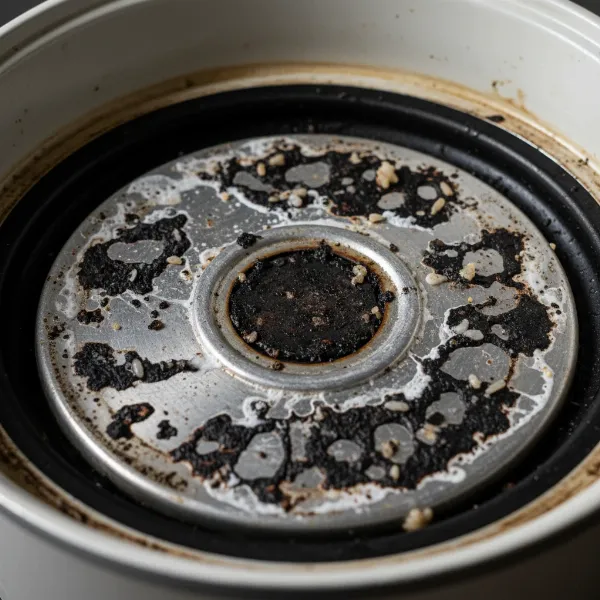 Close-up of a rice cooker heating plate covered in burnt-on food and starch residue.
Signs Your Rice Cooker’s Heating Plate Needs Cleaning
Identifying when your rice cooker’s heating plate requires attention can save you from many frustrating meals. Pay close attention to changes in cooking performance and any visible or olfactory cues. Catching these signs early can prevent more severe issues and prolong the life of your appliance.
Inconsistent Cooking and Burnt Rice
One of the most common indicators of a dirty heating plate is inconsistent cooking. You might find that some rice is perfectly cooked, while other parts are undercooked or, conversely, burnt and stuck to the bottom of the inner pot. This unevenness is a direct result of inefficient heat transfer, where residue on the plate prevents uniform heating across the entire base of the inner pot. Burnt rice, especially in concentrated areas, strongly suggests a heating obstruction.
Unpleasant Odors and Residue Buildup
If your rice cooker emits a strange smell during operation, particularly a burning odor not related to the rice itself, it’s a strong sign that food particles are burning on the heating plate. Visually inspecting the heating plate will often reveal dried spills, dark burnt spots, or a general film of grime. This visible residue confirms that cleaning is overdue, as these particles will continue to burn and potentially affect the taste and safety of your food.
Essential Tools and Safety Precautions Before Cleaning
Before you begin cleaning your rice cooker’s heating plate, it’s crucial to gather the right tools and, more importantly, prioritize safety. Using improper tools or neglecting safety steps can damage your appliance or lead to personal injury. A well-prepared approach ensures an effective and safe cleaning process.
Gathering Your Cleaning Arsenal
You don’t need a specialized kit to clean your rice cooker. Most of the necessary items are likely already in your kitchen. Gather a soft, damp cloth or sponge, a non-abrasive scrubber (like a melamine sponge or an old soft toothbrush for crevices), mild dish soap, baking soda, and white vinegar. For stubborn, burnt-on residue, a wooden or plastic scraper can be helpful, but absolutely avoid anything metal that could scratch the heating plate.
 Essential tools for cleaning a rice cooker heating plate: soft cloth, sponge, soap, baking soda, vinegar.
Prioritizing Safety: Unplugging and Cooling
This step cannot be stressed enough: always unplug your rice cooker from the power outlet before you begin any cleaning. Electricity and water do not mix safely. Allow the appliance to cool down completely, especially if it has recently been used, to prevent burns. Attempting to clean a hot heating plate is not only dangerous but also less effective as residue can be harder to remove. Ensure the unit is completely disconnected from power before proceeding.
Step-by-Step Guide to Effectively Clean the Heating Plate
Cleaning the heating plate requires a methodical approach, moving from general debris removal to tackling stubborn stains. Each step builds on the previous one, ensuring a thorough clean without damaging the delicate components. Follow these instructions carefully to restore your rice cooker’s efficiency.
Removing Loose Debris
Start by removing the inner pot and any other detachable parts from the main unit. Use a dry, soft cloth or a brush to gently wipe away any loose rice grains, crumbs, or dust from the heating plate and surrounding areas. This initial step prevents you from spreading dry debris into a wet mess later on. Pay attention to the small gaps around the edges of the heating plate where particles often accumulate.
Tackling Stubborn Stains and Burnt-On Residue
For more stubborn stains, dampen a soft cloth with warm water and a small amount of mild dish soap. Gently scrub the heating plate in circular motions. For burnt-on residue, create a paste using baking soda and a little water. Apply the paste directly to the stained areas and let it sit for 10-15 minutes to break down the grime. Alternatively, a cloth soaked in white vinegar can also be effective for dissolving hard water stains or starchy buildup.
“Many people overlook cleaning the heating plate, but it’s often the single biggest reason their rice cooker stops performing optimally. Regular maintenance here is key to consistent results.” – Lan Nguyen, Admin of ricecookerhot.com and Rice Cooker Expert
Deep Cleaning for Optimal Performance
After the baking soda paste or vinegar has had time to work, use a non-abrasive sponge or an old toothbrush to gently scrub the softened residue. For extremely tough spots, a wooden or plastic scraper can be used very carefully to lift the burnt material without scratching the non-stick surface of the heating plate. Avoid excessive force and never use metal tools or abrasive cleaners, as these can damage the heating element and the appliance’s functionality. Rinse your cloth frequently and continue wiping until all visible residue is gone.
Drying and Reassembling Your Rice Cooker
Once the heating plate is clean, use a clean, dry cloth to thoroughly wipe away any moisture. It is absolutely essential that the heating plate and all internal components are completely dry before you plug the rice cooker back in or use it. Any residual moisture can cause electrical shorts or damage. You can also allow it to air dry for a few hours to be extra safe. Once dry, reassemble the inner pot and any other detachable parts, and your rice cooker is ready for its next perfect batch of rice.
Maintaining Your Rice Cooker’s Heating Plate for Longevity
Regular maintenance is the secret to a long-lasting and consistently performing rice cooker. Simple habits can prevent the accumulation of residue on the heating plate, saving you from frequent deep cleaning and ensuring every meal is cooked perfectly. Proactive care is far easier than reactive cleaning.
Best Practices for Everyday Use
After each use, once the inner pot has cooled, give the exterior bottom of the inner pot a quick wipe to remove any stray rice grains or water droplets before placing it back in the cooker. This simple action prevents residue from transferring to the heating plate. Also, avoid overfilling the inner pot, as this can lead to boil-overs that spill starchy water onto the heating element. Ensure the inner pot is properly seated and level before starting the cooking cycle.
Regular Cleaning Schedule Recommendations
While cleaning after every major spill is crucial, a routine cleaning schedule for the heating plate is also advisable. Depending on your usage frequency, aim to perform a thorough wipe-down of the heating plate once a month, even if you don’t see immediate residue. This preventative measure helps remove any invisible film or minor buildup before it becomes a problem. Consistent, light cleaning is much better than infrequent, intense scrubbing.
Troubleshooting Common Cooking Issues After Cleaning
Even after a thorough cleaning, you might encounter lingering cooking issues. While a clean heating plate resolves most problems, sometimes other factors are at play. Understanding these can help you determine if further action is needed or if your appliance requires professional attention.
When to Consider Professional Help or Replacement
If your rice cooker continues to exhibit problems like uneven cooking, burning, or failure to heat up, even after the heating plate is spotless, it might indicate a more serious underlying issue. The thermostat, fuse, or heating element itself could be faulty. In such cases, if your appliance is still under warranty, contact the manufacturer. For older units, weigh the cost of professional repair against the cost of a new rice cooker. Often, replacing an old, malfunctioning unit is more economical than repairing it.
Conclusion
A clean heating plate is fundamental to the consistent performance and longevity of your rice cooker. By understanding the causes of buildup, recognizing the signs of a dirty plate, and following a straightforward cleaning process, you can effectively resolve most cooking issues and prevent future problems. Regular maintenance, coupled with proper usage habits, ensures your appliance continues to produce perfectly cooked rice every time. Don’t let a simple oversight compromise your meals; take a few minutes to care for this essential component. What other often-overlooked parts of kitchen appliances might benefit from a little more cleaning attention?
Frequently Asked Questions
Why does rice stick to the bottom of the pot even after cleaning the heating plate?
If rice still sticks after cleaning the heating plate, the issue might be with your inner pot’s non-stick coating, which can degrade over time, or using the wrong type of rice-to-water ratio. Ensure your inner pot is not scratched and consider adjusting your water levels.
Can I use steel wool to clean stubborn burnt spots on the heating plate?
No, absolutely avoid using steel wool or any abrasive metal scrubbers on your rice cooker’s heating plate. These can scratch the delicate surface, causing permanent damage and making future food particles stick even more. Stick to soft cloths, sponges, or wooden/plastic scrapers.
How often should I clean the heating plate of my rice cooker?
It’s best to wipe down the heating plate after every spill or visible residue. For general maintenance, a thorough cleaning, as described in this guide, is recommended once a month for regular users, or quarterly for infrequent use, to prevent buildup.
What causes a “burning smell” from my rice cooker even after I’ve cleaned it?
A burning smell after cleaning could indicate leftover residue in hard-to-reach crevices that wasn’t removed, or a deeper electrical issue. If the smell persists and you’re sure the plate is clean, consult a professional or consider replacing the unit, especially if it’s old.
Is it safe to put water directly on the heating plate to soak tough stains?
No, never pour or spray water directly onto the heating plate to soak it. The main unit of the rice cooker is an electrical appliance and should not be submerged or have water pooling on its electrical components. Use a damp cloth or a paste, ensuring minimal moisture.
Can a dirty heating plate affect the taste of my rice?
Yes, a dirty heating plate can absolutely affect the taste of your rice. Burnt-on food particles or old residue can release unpleasant odors and even transfer subtle off-flavors to your cooking, especially if the internal temperature is not regulated properly due to poor heat transfer.