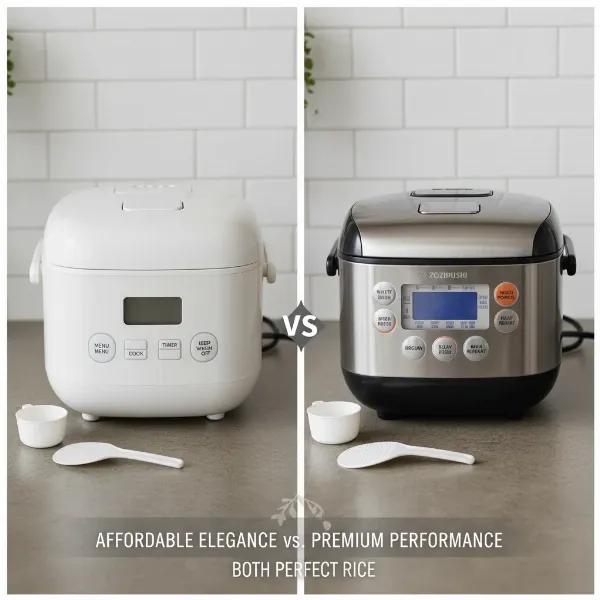
Are you tired of mushy or undercooked rice, especially when aiming for that perfect fluffy Basmati or fragrant Jasmine? Achieving consistently ideal texture for these delicate grains can be a culinary challenge, often requiring precise temperature and moisture control that a simple pot on the stovetop can’t deliver. The secret to consistently perfect results lies in selecting the right appliance. This comprehensive guide will navigate you through the world of rice cookers, helping you understand their technologies and features, so you can confidently choose the best model to elevate your Basmati and Jasmine rice dishes from good to gourmet.
Overview of Rice Cookers
A rice cooker is an automated kitchen appliance designed to boil or steam rice. It consists of a main body, an inner cooking bowl, a heating element, and a thermostat. The device cooks rice by heating water to a boil, then simmering until the water is absorbed, automatically switching to a “keep warm” setting once cooking is complete. This innovation streamlines rice preparation, ensuring consistent results with minimal effort.
The evolution of rice cookers has introduced several types, each offering distinct advantages. Initially, basic mechanical models offered simple cook and warm functions. These were followed by electronic models, which incorporated microcomputers. Today, advanced high-frequency induction heating (IH) rice cookers represent the pinnacle of rice cooking technology, providing unparalleled precision and performance.
Guide to Choosing the Right Rice Cooker
Selecting the ideal rice cooker for your kitchen involves considering several factors, from your household’s needs to the specific technologies that cater to the unique characteristics of Basmati and Jasmine rice. Understanding these aspects will help you make an informed decision.
Determining Your Usage Needs
Before diving into features, reflect on how you’ll use your rice cooker.
- Family Size: The number of people you typically cook for dictates the required capacity. Smaller households might need a 3-cup model, while larger families often benefit from a 5.5-cup or 10-cup cooker.
- Cooking Frequency: If you cook rice daily, durability and advanced features that simplify the process become more important. Occasional users might find basic models sufficient.
- Other Cooking Functions: Do you envision using your rice cooker for more than just rice? Many modern appliances double as slow cookers, steamers, or even cake makers, adding versatility to your kitchen arsenal.
|
Our Picks for the Best Rice Cooker in 2026
As an Amazon Associate I earn from qualifying purchases.
|
||
| Num | Product | Action |
|---|---|---|
| 1 | BLACK+DECKER Rice Cooker 6-Cup (Cooked) with Steaming Basket, Removable Non-Stick Bowl, White |

|
| 2 | Aroma Housewares 4-Cups (Cooked) / 1Qt. Rice & Grain Cooker (ARC-302NGBL), Blue |
|
| 3 | AROMA Digital Rice Cooker, 4-Cup (Uncooked) / 8-Cup (Cooked), Steamer, Grain Cooker, Multicooker, 2 Qt, Stainless Steel Exterior, ARC-914SBD |
|
| 4 | Zojirushi Micom 3-Cup Compact Size, Multiple Settings, Stainless Steel Made, Built-In Retractable Power Cord and Easy to Transport Rice Cooker and Warmer |
|
| 5 | AROMA® Select Stainless® Rice Cooker, 3-Cup (Uncooked) / 6-Cup (Cooked), Stainless Steel Inner Pot, Small Rice Cooker, Auto Keep Warm, 1.2 Qt, White, ARC-753SG |
|
| 6 | COMFEE' Compact Rice Cooker, 6-in-1 Stainless Steel Multi Cooker, Slow Cooker, Steamer, Saute, and Warmer, 2 QT, 8 Cups Cooked(4 Cups Uncooked), Brown Rice, Quinoa and Oatmeal, 6 One-Touch Programs |
|
| 7 | AROMA® Mini Rice Cooker, 2-Cup (Uncooked) / 4-Cup (Cooked), Grain Cooker, Soup Maker, Oatmeal Cooker, Auto Keep Warm, 1 Qt, Light Green |
|
| 8 | COSORI Rice Cooker 10 Cup, 24h Keep Warm, Non-stick Ceramic Inner Pot, 18 Functions Fuzzy Logic Rice Maker with Stainless Steel Steamer Basket, Sauté, Slow Cooker, Black |
|
| 9 | AROMA® Mini Rice Cooker, 2-Cup (Uncooked) / 4-Cup (Cooked), Grain Cooker, Soup Maker, Oatmeal Cooker, Auto Keep Warm, 1 Qt, Milk Tea color |
|
| 10 | Instant Pot 4QT RIO Mini 7-in-1 Multi-Cooker, Pressure Cooker, Slow cook, Sauté, Steam, Rice Maker, Yogurt, & Warmer, Sea Salt, 4 Quarts |
|
Types of Rice Cookers and Their Pros and Cons
Different rice cooker technologies offer varying levels of control and performance, directly impacting the quality of your Basmati and Jasmine rice.
- Mechanical Rice Cookers: These are the most basic and affordable, typically featuring a single “cook” switch that automatically flips to “warm” when done.
- Pros: Simple to use, budget-friendly, compact.
- Cons: Less precise temperature control, can sometimes lead to inconsistent results, may scorch rice at the bottom.
- Electronic (Micom/Fuzzy Logic) Rice Cookers: Equipped with a microcomputer (Micom) and “fuzzy logic” technology, these cookers have built-in sensors that detect moisture levels and adjust cooking time and temperature dynamically.
- Pros: Significantly improved consistency, prevent undercooking or mushiness, often include specialized settings for different rice types (like white or long-grain), automatic “keep warm” features that maintain rice quality for hours.
- Cons: Higher price point than mechanical models, cooking cycles can be longer due to precise adjustments.
- Induction Heating (IH) Rice Cookers: These represent the most advanced technology, using magnetic fields to heat the entire inner pot evenly from all sides, rather than just from the bottom.
- Pros: Superior temperature control and even heat distribution, resulting in perfectly fluffy, separate grains, often include dedicated settings for Basmati or Jasmine rice, excellent “keep warm” performance.
- Cons: Most expensive option, can have longer cooking times for certain settings.
Inner Pot Material
The material of the inner pot significantly impacts cooking performance, durability, and ease of cleaning.
- Aluminum: Common in basic models, it heats quickly but may not distribute heat as evenly.
- Stainless Steel: Durable and non-reactive, but rice can stick without a good non-stick coating or proper care.
- Ceramic: Offers excellent non-stick properties and even heating, often favored for healthier cooking.
- Non-stick Coatings: Essential for preventing rice from sticking and simplifying cleanup. Look for high-quality, durable non-stick coatings.
- Cast Iron: Rarely seen in electric rice cookers, but offers superior heat retention.
For Basmati and Jasmine rice, a non-stick inner pot is highly recommended to ensure easy removal of separate, fluffy grains. Quality materials contribute to consistent heating, which is crucial for these delicate varieties.
Rice Cooker Capacity
Choosing the right size prevents overfilling or underfilling, which can affect cooking performance.
- Small (under 1 liter / 3-cup): Ideal for singles or couples, yielding 1-3 cups of uncooked rice (2-6 cups cooked).
- Medium (1-1.8 liters / 5.5-10 cups): The most popular size for average families, cooking 3-5.5 cups of uncooked rice (6-11 cups cooked).
- Large (over 1.8 liters / 10+ cups): Suitable for large families, entertaining, or meal prepping, handling 6-10+ cups of uncooked rice (12-20+ cups cooked).
Consider that rice cooker “cups” typically refer to the smaller 180ml Japanese go measurement, not standard US measuring cups, so always check the product specifications.
Special Features
Modern rice cookers come with a host of features that can enhance convenience and cooking quality.
- Delay Timer: Allows you to add ingredients hours in advance and set the cooker to start at a later time, ensuring fresh rice precisely when you need it.
- Keep Warm Function: Automatically switches on after cooking, maintaining the rice at an optimal serving temperature without drying it out or overcooking.
- Quick Cook Setting: Speeds up the cooking process for when you’re short on time, though it might slightly compromise texture compared to standard cycles.
- Specific Grain Settings: Essential for Basmati and Jasmine, these pre-programmed settings optimize temperature and cooking time for perfect results. Look for “long grain,” “white rice,” or even dedicated “Basmati” or “Jasmine” modes.
- Multi-cooking Modes: Features for cooking porridge, sushi rice, brown rice, steaming vegetables, or even slow cooking can add significant value.
Reputable Rice Cooker Brands
Investing in a well-regarded brand often ensures better quality, durability, and customer support.
- Zojirushi: Widely considered a premium brand, known for its advanced Fuzzy Logic and Induction Heating technology, consistently producing perfectly cooked rice, including Basmati and Jasmine. Models like the Neuro Fuzzy (NS-ZCC10) and Induction Heating (NP-HCC10) are frequently praised.
- Cuckoo: A popular Korean brand, Cuckoo offers a range of Micom and IH cookers known for their precision and diverse settings. The CR-0655F Micom model is a notable budget-friendly option.
- Tiger: Another well-respected Japanese brand, Tiger offers Micom cookers, some featuring the unique “Tacook” synchro-cooking function for simultaneous main dish and rice preparation (e.g., JAX-T10U).
- Aroma: Known for offering good value, Aroma provides digital multicookers that can handle various grains.
- KitchenAid: Offers higher-end grain and rice cookers with modern aesthetics and robust features.
Comparison Table of Rice Cooker Types
Here’s a detailed comparison to help you weigh the options for Basmati and Jasmine rice:
| Feature | Mechanical (Basic) | Electronic (Micom/Fuzzy Logic) | Induction Heating (IH) |
|---|---|---|---|
| Price Range | Low ($20-$50) | Medium ($70-$200) | High ($200-$500+) |
| Technology | Simple heating element, thermostat | Microcomputer with sensors (Fuzzy Logic) | Magnetic fields heat entire inner pot evenly |
| Heat Control | Basic on/off | Intelligent adjustments based on rice type and quantity | Precise, uniform heating from all sides |
| Consistency | Fair (can vary with rice type/quantity) | Good (reliable, prevents mushy/undercooked) | Excellent (perfectly fluffy, separate grains every time) |
| Basmati/Jasmine Performance | Requires manual water adjustment; results can be inconsistent | Specific settings for white/long grain improve results significantly | Often includes dedicated Basmati/Jasmine settings for optimal texture and aroma |
| Features | Cook, Keep Warm | Multiple cooking modes, delay timer, extended keep warm | Advanced cooking modes, texture options, quiet operation |
| Durability | Good, simple mechanics | Very Good | Excellent, built for precision and longevity |
| Cooking Time | Fast (typically 15-20 minutes) | Moderate (30-60 minutes, depending on settings) | Moderate to Longer (40-70 minutes, due to precise cycles) |
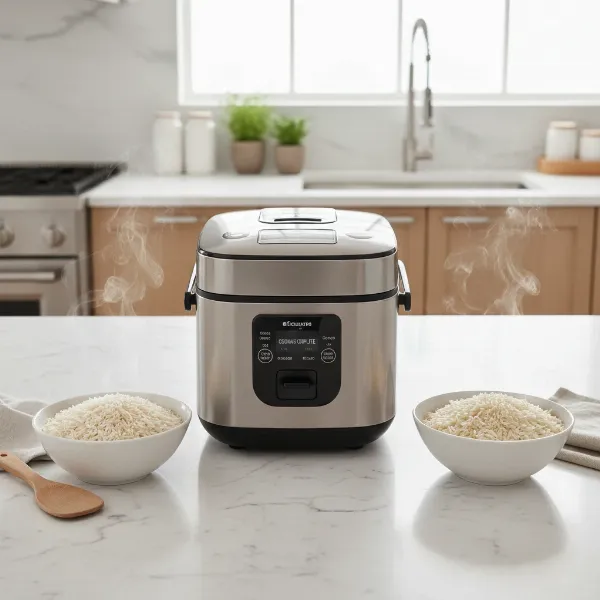 A sleek, modern induction heating rice cooker with Basmati and Jasmine rice cooking in the background, showcasing fluffy grains.
Where to Buy a Rice Cooker?
Once you’ve identified the type and features best suited for your needs, knowing where to purchase your rice cooker is the next step.
- Electronics Stores: Major electronics retailers and department stores often carry a wide selection of rice cookers from various brands. You can physically inspect models and speak with sales associates.
- Online Retailers: Websites like Amazon, Best Buy, Walmart, and the official brand websites (Zojirushi, Cuckoo, Tiger) offer extensive choices, competitive pricing, and user reviews. This is often the best route for finding specialized or high-end models.
- Specialty Asian Markets: Some larger Asian grocery stores might stock specific Japanese or Korean rice cooker brands, offering unique models.
When buying, always check the warranty policy, return options, and customer reviews to ensure a satisfactory purchase.
Tips for Using and Maintaining Your Rice Cooker
To ensure your Basmati and Jasmine rice are always perfect and to prolong your rice cooker’s lifespan, follow these expert tips.
Proper Cleaning and Maintenance
Regular and correct cleaning is crucial, especially for non-stick inner pots.
- Cool Down: Always let the inner pot cool completely before washing.
- Gentle Washing: Use warm, soapy water and a non-abrasive sponge or cloth. Avoid metal scrubbers or harsh detergents that can damage the non-stick coating.
- Lid and Vent: Clean the inner lid and steam vent regularly, as starch buildup can affect performance and hygiene. Many models have removable inner lids for easier cleaning.
- Exterior: Wipe the exterior with a damp cloth; never immerse the main unit in water.
Optimal Use for Basmati and Jasmine Rice
These long-grain, aromatic varieties require a slightly different approach than other rice types.
- Rinsing is Key: Rinse Basmati and Jasmine rice under cold running water until the water runs mostly clear. This removes excess starch, preventing clumping and ensuring separate, fluffy grains.
- Water Ratio:
- Basmati Rice: A common ratio is 1 cup of Basmati rice to 1.5 cups of water for unsoaked rice. If you pre-soak (which is recommended for 20-30 minutes to help grains elongate and soften), reduce water slightly to about 1.25 cups per cup of rice.
- Jasmine Rice: Typically requires less water, around 1 cup of Jasmine rice to 1.25 cups of water. Some models may suggest a 1:1 ratio. Always check your rice cooker’s specific instructions or use the markings on the inner pot.
- Soaking Basmati (Optional but Recommended): Soaking Basmati for 20-30 minutes can result in longer, more distinct grains. Remember to adjust the water ratio accordingly.
- Resting Time: Once the rice cooker switches to “keep warm,” let the rice rest for an additional 5-15 minutes with the lid closed. This allows the grains to firm up and absorb any residual steam, leading to a superior texture.
- Fluffing: Gently fluff the cooked rice with a rice paddle or fork before serving to separate the grains and release steam.
Troubleshooting Common Rice Cooker Issues
- Mushy Rice: Too much water or not enough resting time. Adjust water ratio and allow adequate resting.
- Dry/Hard Rice: Not enough water or lid not sealed properly. Ensure correct water ratio and check the lid seal.
- Sticking to the Bottom: Inner pot coating may be damaged, or rice wasn’t rinsed adequately. Use a non-stick pot, rinse rice thoroughly, and consider adding a tiny bit of oil or butter to the water.
- Burning Smell: Could be scorched rice due to insufficient water or a faulty heating element. Clean the pot thoroughly and check for damage.
Conclusion
Choosing the right rice cooker can transform your daily meals, especially when preparing delicate varieties like Basmati and Jasmine rice. By understanding the differences between mechanical, electronic (Micom/Fuzzy Logic), and Induction Heating models, and considering factors like capacity, inner pot material, and special features, you can find an appliance that consistently delivers perfectly cooked, fluffy, and aromatic results. Brands like Zojirushi, Cuckoo, and Tiger stand out for their advanced technologies tailored to achieve culinary perfection. Invest wisely, follow proper usage and maintenance, and enjoy effortless, delicious rice every time.
What’s your ultimate goal for your next rice cooker – consistent perfection, versatile functionality, or a balance of both?
Frequently Asked Questions
What makes a rice cooker ideal for Basmati and Jasmine rice?
Rice cookers ideal for Basmati and Jasmine rice offer precise temperature control and even heat distribution, often achieved through Fuzzy Logic or Induction Heating technology. These features prevent grains from becoming mushy or undercooked, ensuring each grain is separate, fluffy, and retains its delicate aroma. Dedicated settings for long-grain or white rice are also highly beneficial.
Can I use the same rice cooker for both Basmati and Jasmine rice?
Absolutely. Most high-quality rice cookers, especially those with Fuzzy Logic or Induction Heating, come with multi-menu settings that can handle various rice types, including both Basmati and Jasmine. Some even have specific settings that automatically adjust cooking for optimal results for each variety.
Is induction heating worth the extra cost for cooking Basmati and Jasmine rice?
For frequent rice cooks who prioritize absolute perfection in texture and aroma, induction heating is often worth the investment. It provides superior heat distribution throughout the entire inner pot, which is crucial for the delicate and consistent cooking required by Basmati and Jasmine rice, leading to unparalleled results.
How much water should I use for Basmati and Jasmine rice in a rice cooker?
For Basmati rice, a common starting point is 1 cup of rice to 1.5 cups of water (reduced to 1.25 cups if soaked). For Jasmine rice, a 1 cup rice to 1.25 cups of water ratio is generally recommended. Always refer to your rice cooker’s specific guidelines or the markings on its inner pot, as these can vary.
How long does Basmati and Jasmine rice take to cook in a rice cooker?
Cooking times can vary by model and settings, but typically, Basmati and Jasmine rice take around 20-30 minutes to cook in a modern rice cooker. This usually doesn’t include the resting time, which is important for the final texture.